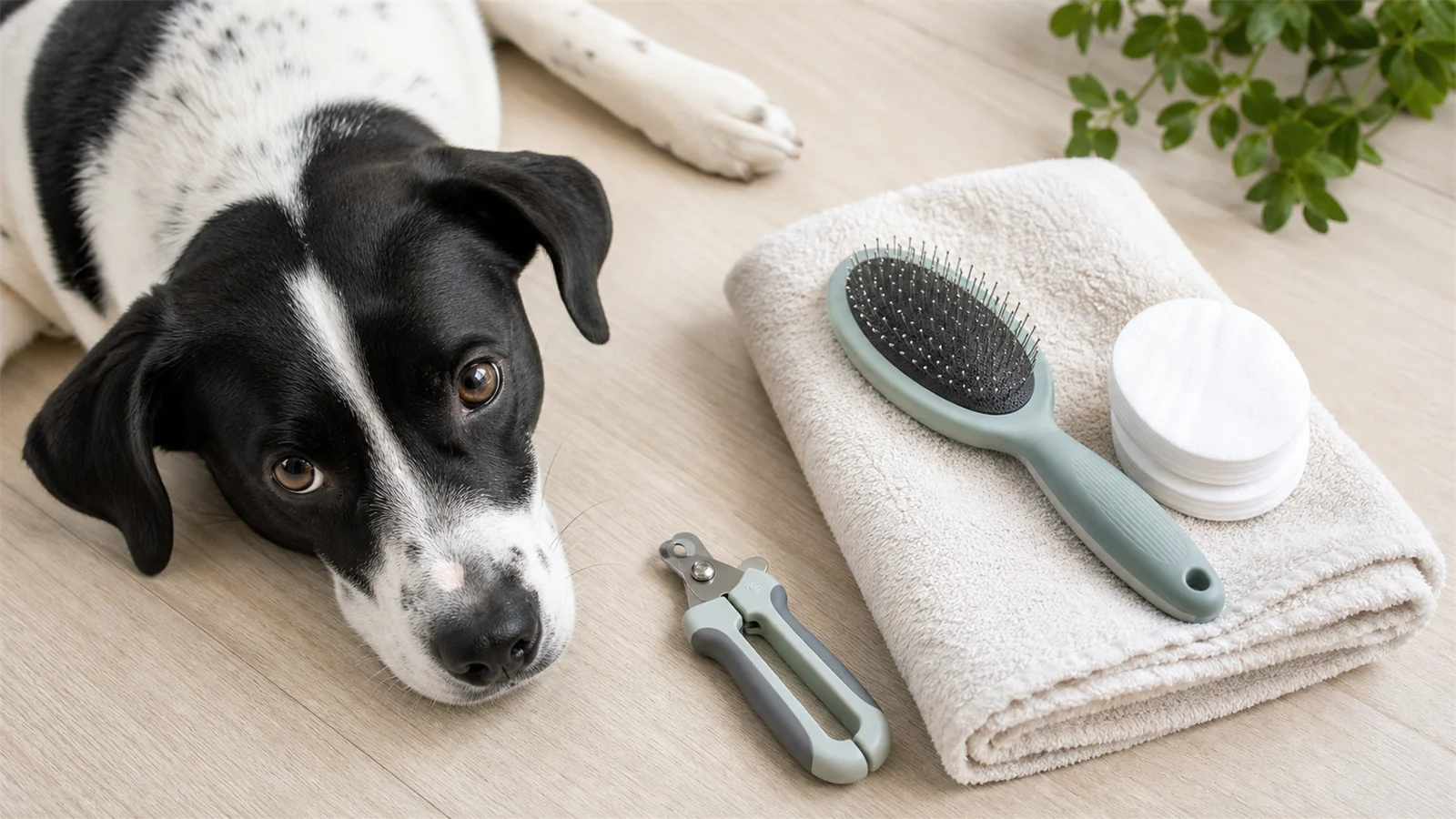

A beginner dog grooming checklist should help you notice problems early, keep your dog comfortable, and avoid tasks that belong with a professional. Start with simple checks: coat, skin, eyes, ears, paws, nails, comfort, and behavior. Then build brushing, bathing, nails, and ear care into short sessions your dog can tolerate.
Do not try to do everything in one day. A calm five-minute session is more useful than a full routine that ends in fear or force.
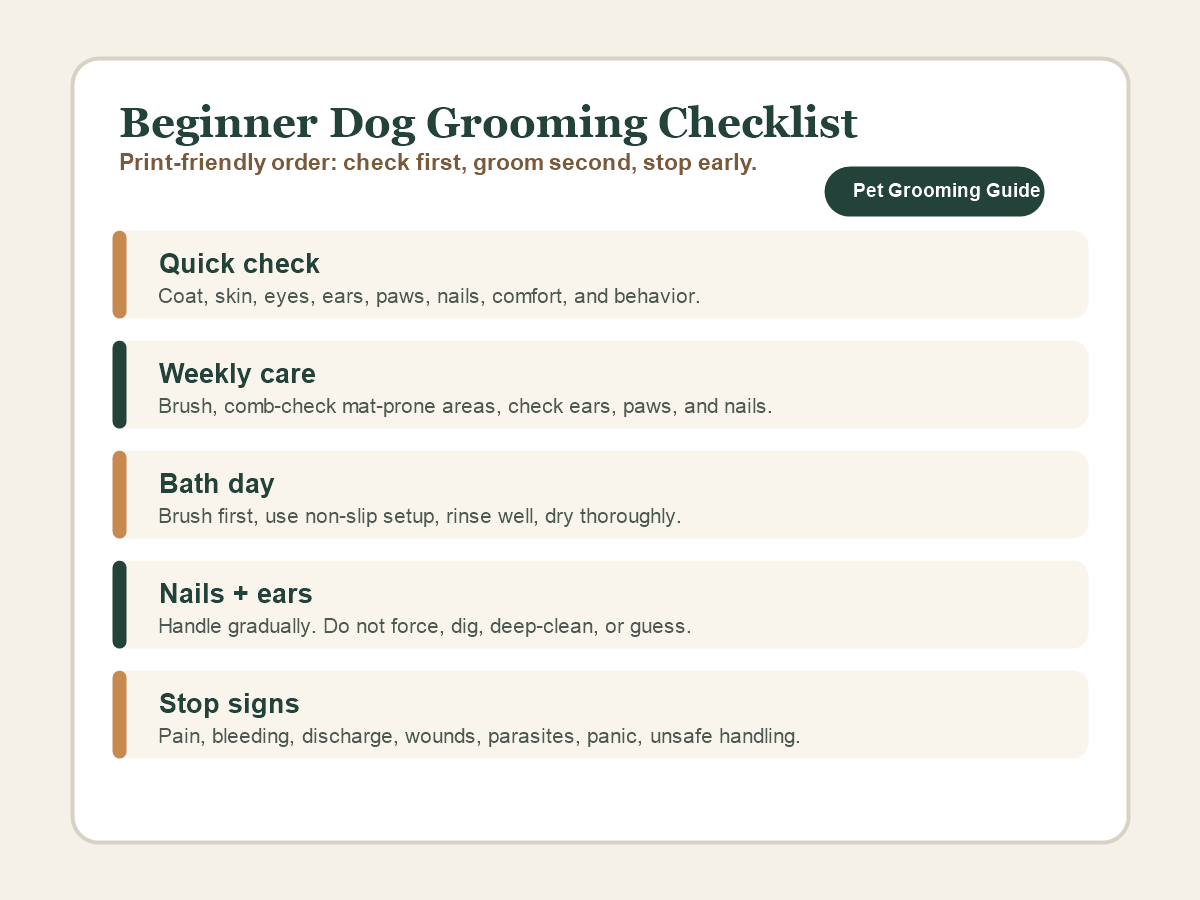
Beginner Rule: Check First, Groom Second
Before brushing, bathing, trimming nails, or cleaning ears, look at the whole dog. Check:
- Coat condition and loose hair.
- Red, raw, flaky, wounded, or painful skin.
- Eyes for squinting, redness, injury, or discharge.
- Ears for odor, redness, swelling, pain, or discharge.
- Paws for cracked pads, debris, swelling, or limping.
- Nails for length, cracks, and safe handling tolerance.
- Behavior for fear, growling, freezing, frantic movement, or panic.
If you find a medical-looking problem, grooming is no longer the solution. Stop and ask a veterinarian.
Daily or Quick Check
Use this as a fast habit, especially after walks or outdoor play.
| Area | What to check | What not to do |
|---|---|---|
| Coat | Dirt, burrs, loose hair, small tangles | Do not pull painful tangles |
| Skin | Redness, sores, parasites, swelling | Do not diagnose or treat skin problems |
| Eyes | Clear, comfortable eyes | Do not treat red, painful, or discharging eyes |
| Paws | Debris, cracked pads, limping | Do not dig at embedded objects |
| Behavior | Calm enough to handle | Do not force restraint |
For puppies, seniors, and nervous dogs, this daily check may be the whole session.
Weekly Checklist
Most beginners can start with a weekly maintenance session:
- Brush with a coat-appropriate tool category.
- Comb-check mat-prone areas if the coat is long, curly, dense, or feathered.
- Check ears without deep cleaning.
- Check nails and paws.
- Wipe ordinary surface dirt from the coat or feet.
- Note any changes to skin, coat, smell, comfort, or behavior.
Short smooth coats may need less brushing than curly or long coats, but every dog benefits from being checked regularly. For timing by coat, use the dog grooming schedule by coat type.
Monthly or As-Needed Checklist
Some tasks happen less often or depend on the dog:
- Bathing when dirty, smelly from ordinary activity, or seasonally needed.
- Nail trimming or grinding when nails are long and the dog can be handled safely.
- Ear cleaning only when appropriate and not painful.
- Professional grooming for coat shaping, clipping, heavy shedding help, or unsafe handling.
Do not bathe to cover up persistent odor, itch, discharge, wounds, or inflamed skin. Those are stop signs.
Bath-Day Checklist
Before the bath:
- Brush out loose hair and small tangles.
- Stop if mats are tight, painful, widespread, or close to the skin.
- Put a non-slip surface in place.
- Keep towels ready.
- Plan a short session with breaks.
During the bath:
- Use lukewarm water.
- Keep shampoo and water away from eyes and ear canals.
- Rinse thoroughly.
- Stop if the dog panics, overheats, struggles to breathe, or cannot be handled safely.
After the bath:
- Dry thoroughly, including paws, armpits, belly, ears, and skin folds.
- Brush again once fully dry.
- Save nails or ears for another day if the dog is tired.
For a deeper bath-day safety check, see dog bathing mistakes to avoid at home.
Nail Checklist
Nail care should be gradual. Handle paws first, reward calm behavior, and trim or grind only small amounts when you know where you are working.
Stop for bleeding, pain, limping, panic, sudden jerking, growling, or uncertainty about nail anatomy. Do not wrestle through nail care. A groomer, veterinary team, or trainer-informed plan can make nail work safer.
Ear Checklist
For beginners, ear care starts with looking and smelling, not deep cleaning. Healthy ears should not be painful, swollen, heavily odorous, or full of discharge.
Do not put cotton swabs down the ear canal. Do not treat suspected ear infections at home. Do not keep cleaning an ear that looks worse or hurts.
Grooming Tasks Beginners Should Avoid
Beginners should not attempt:
- Severe mat removal.
- Cutting mats out with scissors.
- Advanced clipping or breed trims.
- Deep ear cleaning.
- Medical skin, ear, eye, fold, or wound care.
- Anal gland expression.
- Dental scaling.
- Forced restraint or sedation.
Learning what to skip is part of good at-home grooming.
When to Stop and Call a Pro or Vet
Call a veterinarian for wounds, parasites, hot spots, bad odor with redness, red or raw skin, ear pain or discharge, eye squinting or discharge, limping, bleeding nails, suspected infection, breathing trouble, overheating, or pain.
Call a professional groomer for severe mats, coat work you cannot safely maintain, nail care you cannot do safely, or a dog that cannot be groomed without force.
Bottom Line
A beginner grooming routine should feel calm, short, and repeatable. Check your dog first, do the easy maintenance your dog can tolerate, split bigger tasks across days, and stop early when you see pain, fear, skin problems, ear problems, severe mats, or unsafe handling.
FAQ
What should be on a beginner dog grooming checklist?
A beginner checklist should include coat brushing, skin checks, eyes, ears, paws, nails, bath planning, drying, behavior checks, and clear stop rules.
How often should beginners groom a dog at home?
Do quick comfort checks often, brush on a coat-appropriate schedule, bathe as needed, and check nails every one to two weeks. Adjust for coat type and tolerance.
What grooming tasks should beginners avoid?
Avoid severe mat removal, advanced clipping, deep ear cleaning, medical care, forced restraint, sedation advice, anal gland expression, and dental scaling.
Do I have to do nails, ears, brushing, and bathing in one session?
No. Splitting tasks across days is often safer and calmer, especially for puppies, seniors, fearful dogs, and beginners.
What are signs I should stop grooming?
Stop for pain, bleeding, discharge, swelling, wounds, parasites, overheating, breathing trouble, panic, aggression, or any handling that feels unsafe.