
Prevent dog mats by brushing and comb-checking high-friction areas before tangles tighten, keeping the coat dry and clean, and stopping early when hair pulls skin or the dog shows pain. This page is prevention only. It does not teach dematting, cutting, shaving, or brushing through painful mats.
Any frequency here is a conservative starting point. Long, curly, wavy, feathered, or double coats usually need more attention than smooth coats, and the routine changes with coat, activity, moisture, and mat history.
What Causes Dog Mats?
Mats form when loose hair, friction, moisture, and skipped comb checks let the coat compact. They often start where hair rubs, bends, or traps dampness.
ASPCA matting guidance notes that mats are uncomfortable and prevention depends on a dog’s coat and grooming needs. ASPCA general dog-care guidance also supports frequent brushing and checking the coat before bathing.
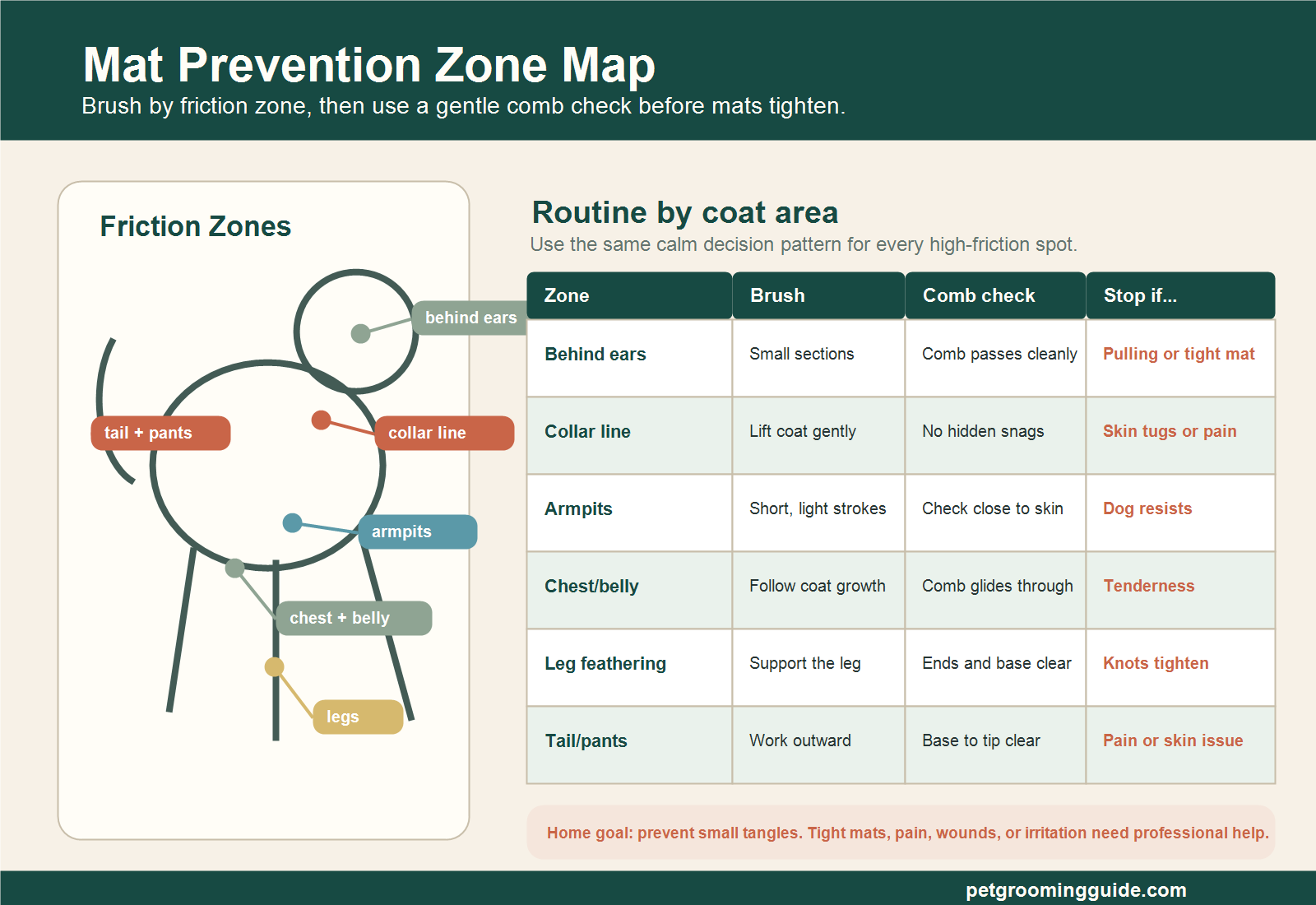
| Zone | Why it mats | Conservative check rhythm |
|---|---|---|
| Behind ears | Friction and fine coat | Check most often |
| Collar or harness line | Compression and rubbing | Check after gear-heavy days |
| Armpits and chest | Movement and moisture | Check often on long or curly coats |
| Belly and legs | Dirt, dampness, friction | Check after wet or outdoor days |
| Tail, pants, feathering | Long coat and shedding | Check more during shedding |
Do not treat this as a universal schedule. A dog with a coat that mats easily may need checks more often.
High-Friction Zones to Check First
Start where mats usually form: behind the ears, under collars, armpits, chest, belly, inner legs, tail base, pants, and feathering. Use gentle sectioning, and stop if the coat pulls skin.
Brush Before Bath: Why Water Can Make Tangles Worse
Brush and comb-check before bathing when the coat is safe to work. ASPCA dog grooming tips and ASPCA general dog-care guidance support brushing or combing out mats before bathing.
Do not bathe over mats, painful tangles, wounds, parasites, irritation, or skin pulling.
Comb-Check Routine After Brushing
A comb check verifies the coat after brushing. A pass means the comb glides through a small section without catching, tugging, pulling skin, or causing the dog discomfort. If the comb catches, stop that section and return to gentle brushing only if it is safe.
If catching, pain, tight mats, skin redness, or resistance appears, route to a qualified groomer or veterinarian.
Prevention by Coat Type
Smooth coats may need only light brushing and skin checks. Long, curly, wavy, feathered, and double coats often need more frequent friction-zone checks. Exact timing depends on the individual coat, activity, moisture, and mat history.
Use category-level tools only: slicker brush, pin brush, comb, and an undercoat rake when appropriate. This page does not recommend products.
When Prevention Is Too Late and a Pro Is Needed
Use a professional groomer for tight mats, severe mats, skin pulling, painful tangles, or coat work beyond your skill. Severe mat removal is not a home task. Use a veterinarian for wounds, irritation, parasites, bleeding, pain, medically fragile dogs, or skin problems.
FAQ
How do you prevent mats on a dog?
Brush and comb-check friction zones before tangles tighten, keep the coat dry, brush before bathing, and stop early for pain or skin pulling.
Where do dogs mat most often?
Common zones include behind the ears, the collar line, armpits, chest, belly, legs, tail, pants, and feathering.
Should you bathe a matted dog?
No. Do not bathe over mats. Brush only if it is safe, and use a professional for tight or painful mats.
Can small tangles become mats?
Yes. Loose tangles can compact into mats if friction, moisture, and loose hair build up.
When should a groomer handle dog mats?
Use a groomer for tight, severe, skin-close, painful, or recurring mats, or when the dog resists handling.
Bottom Line
The best way to prevent dog mats is to check friction zones early, brush before bathing when the coat is safe, and comb-check gently after brushing. Once hair is tight, painful, skin-close, or pulling, stop home grooming and use a qualified groomer or veterinarian.