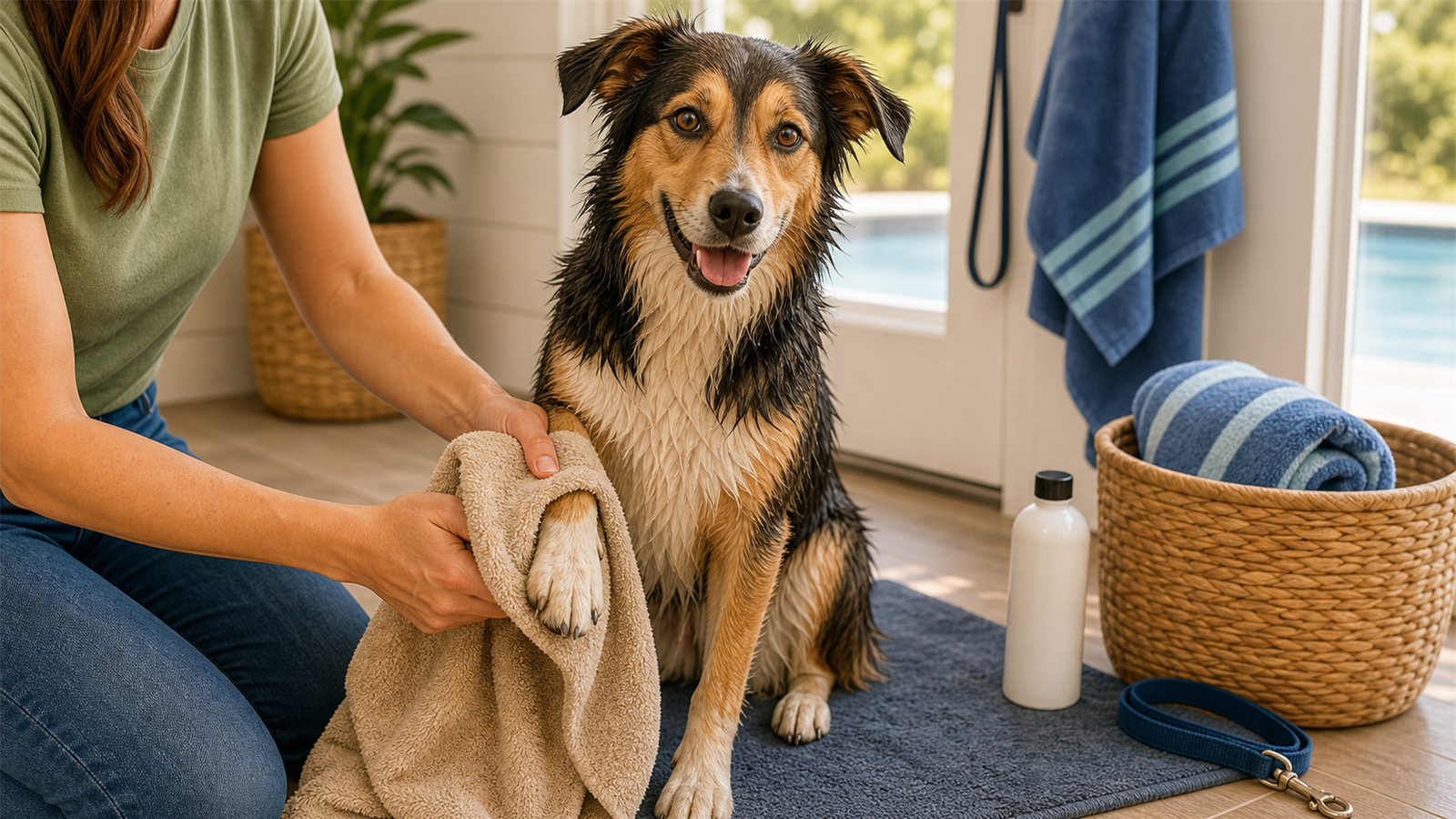
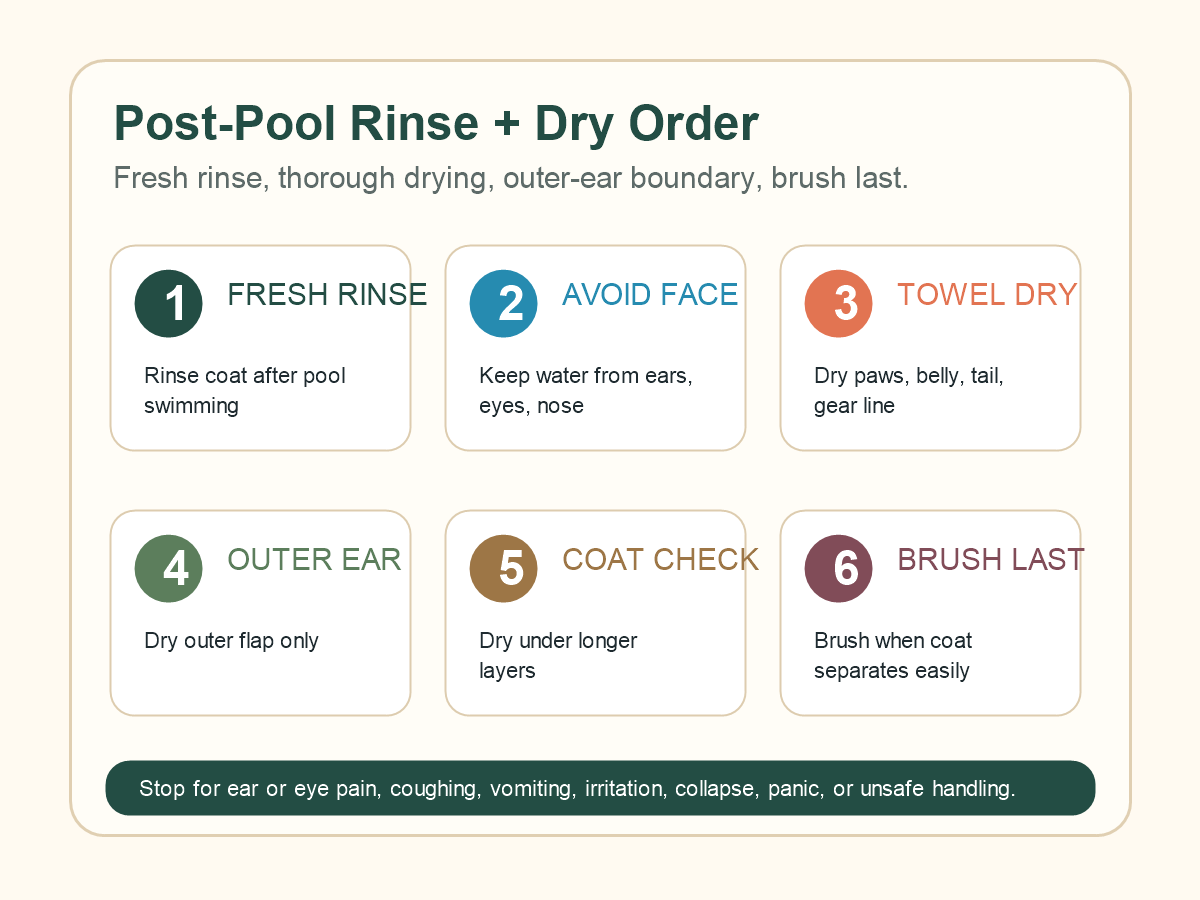
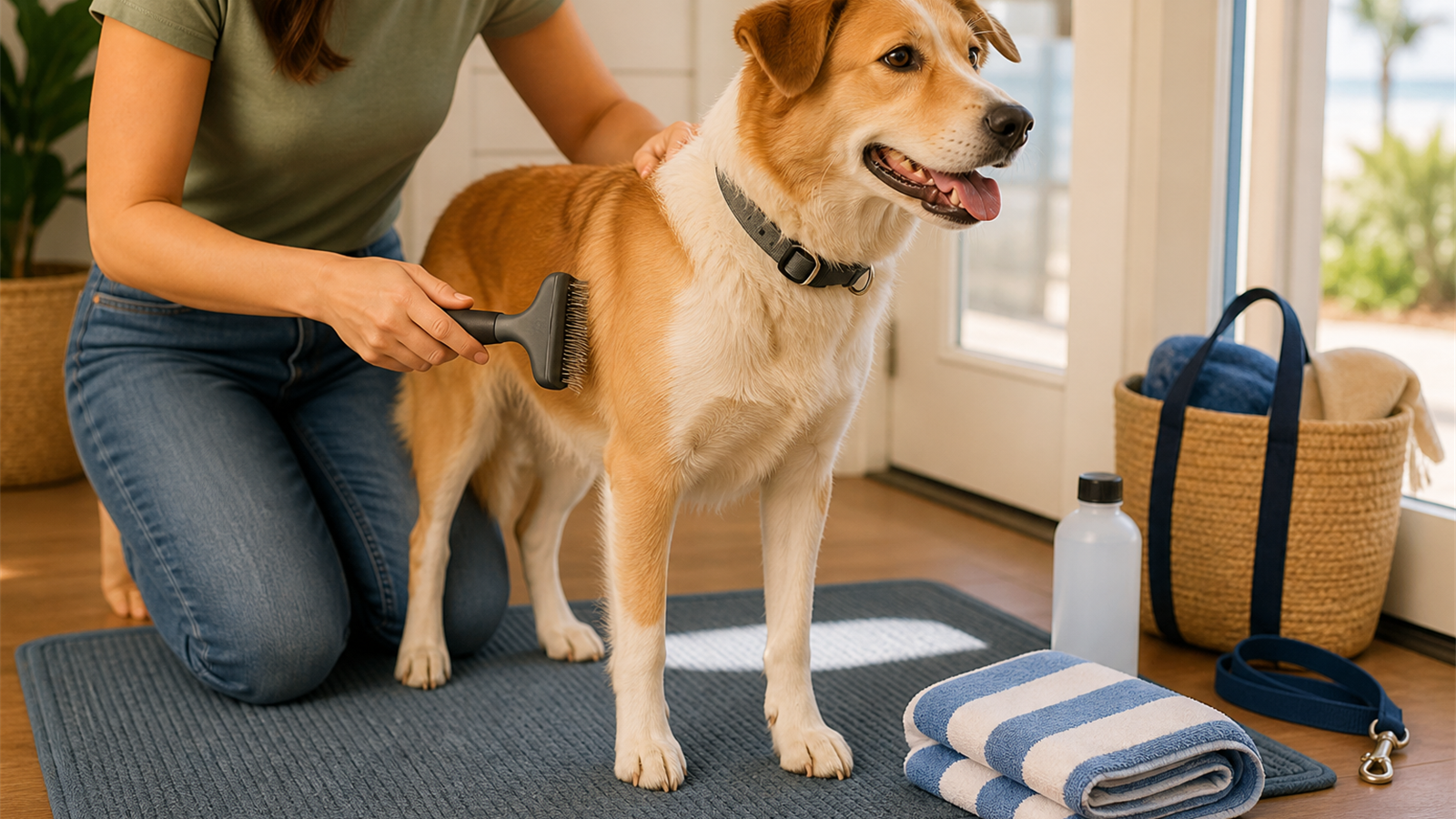
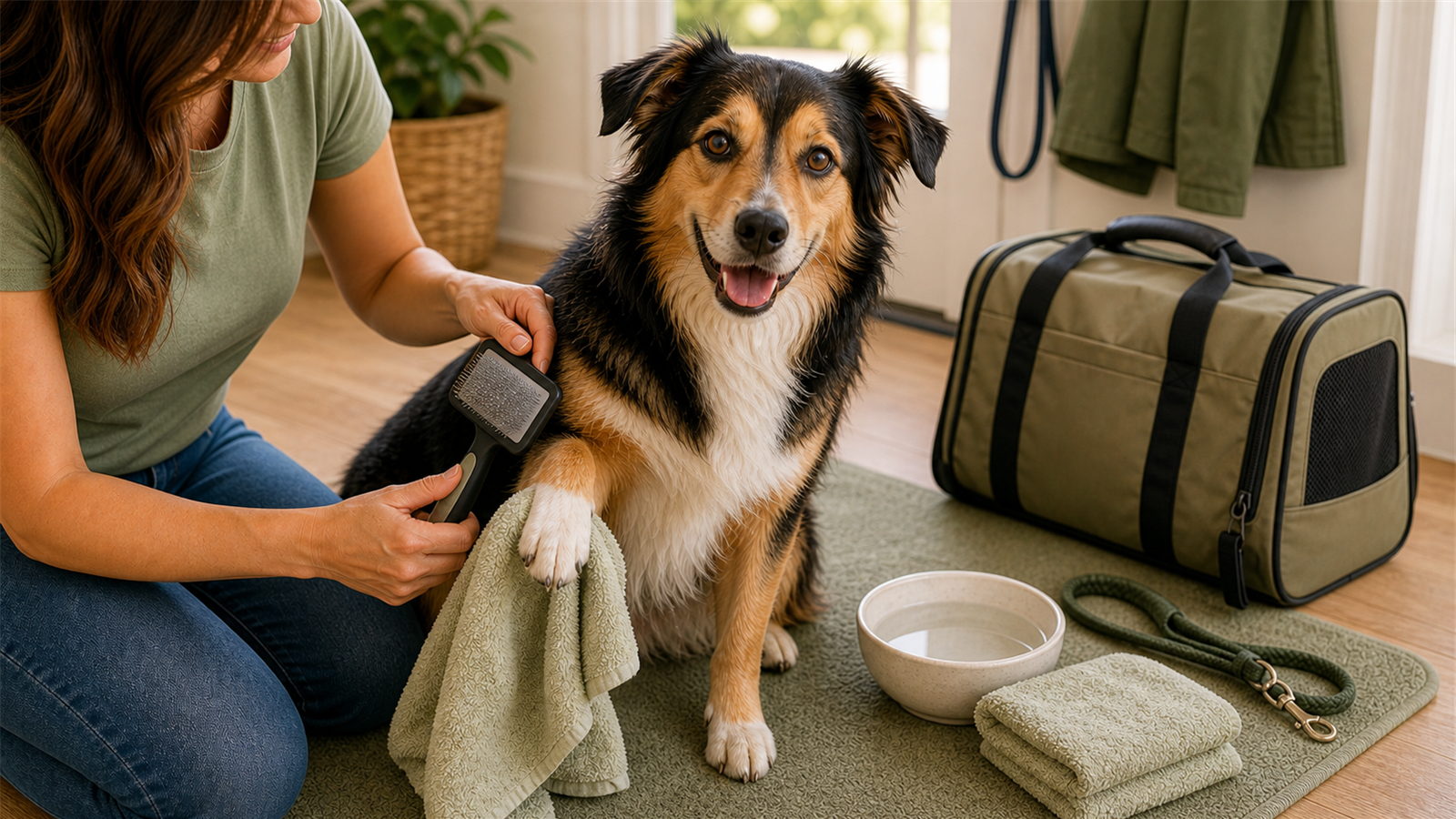
Keep water away from ears, eyes, and nose. Towel-dry paws, belly, tail, coat layers, and gear-contact areas. Brush when the coat is dry enough and separates easily.
Stop Signs
Stop for eye pain, ear pain, redness, swelling, discharge, coughing, vomiting, suspected chemical exposure, panic, or unsafe handling.
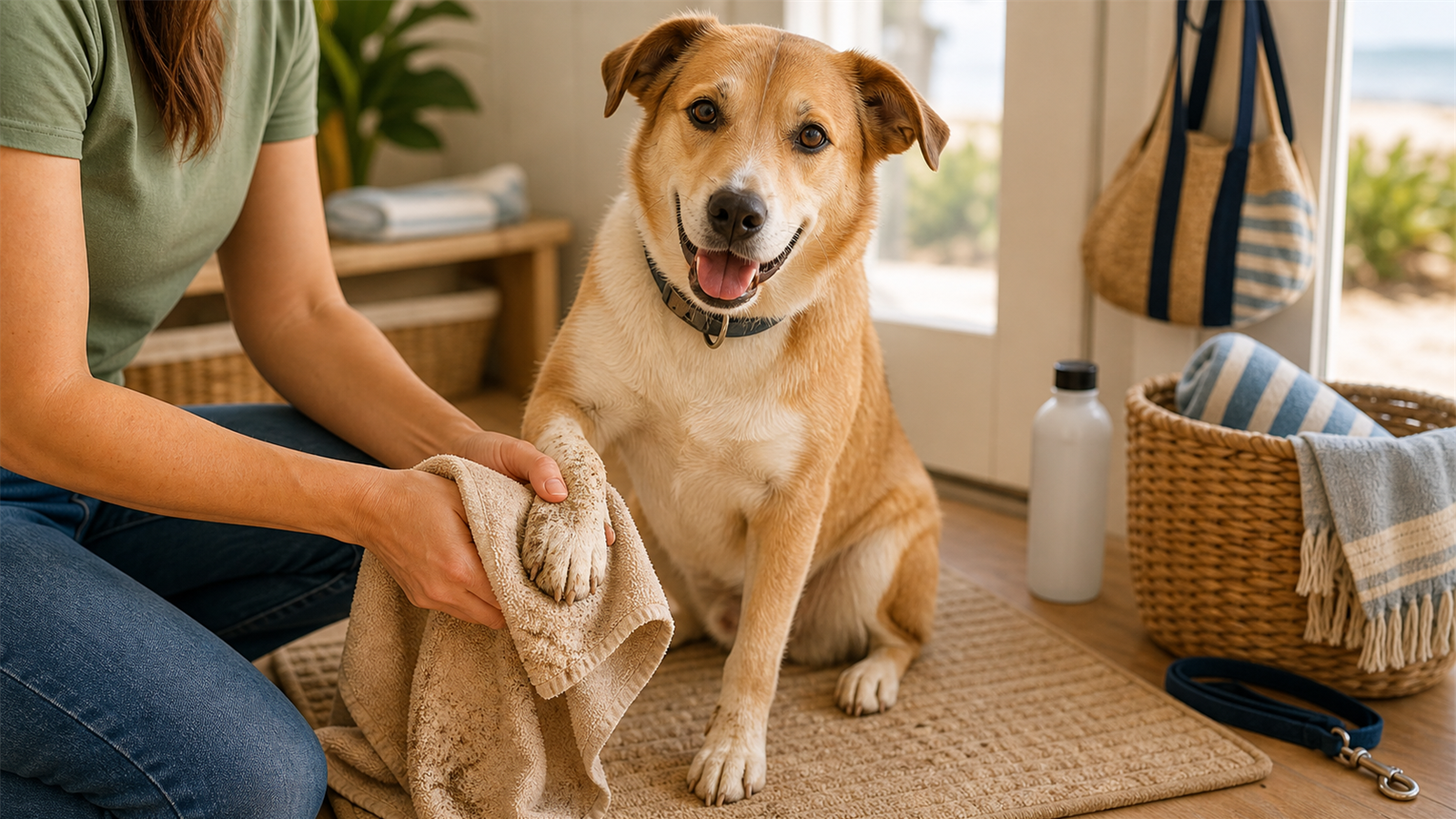
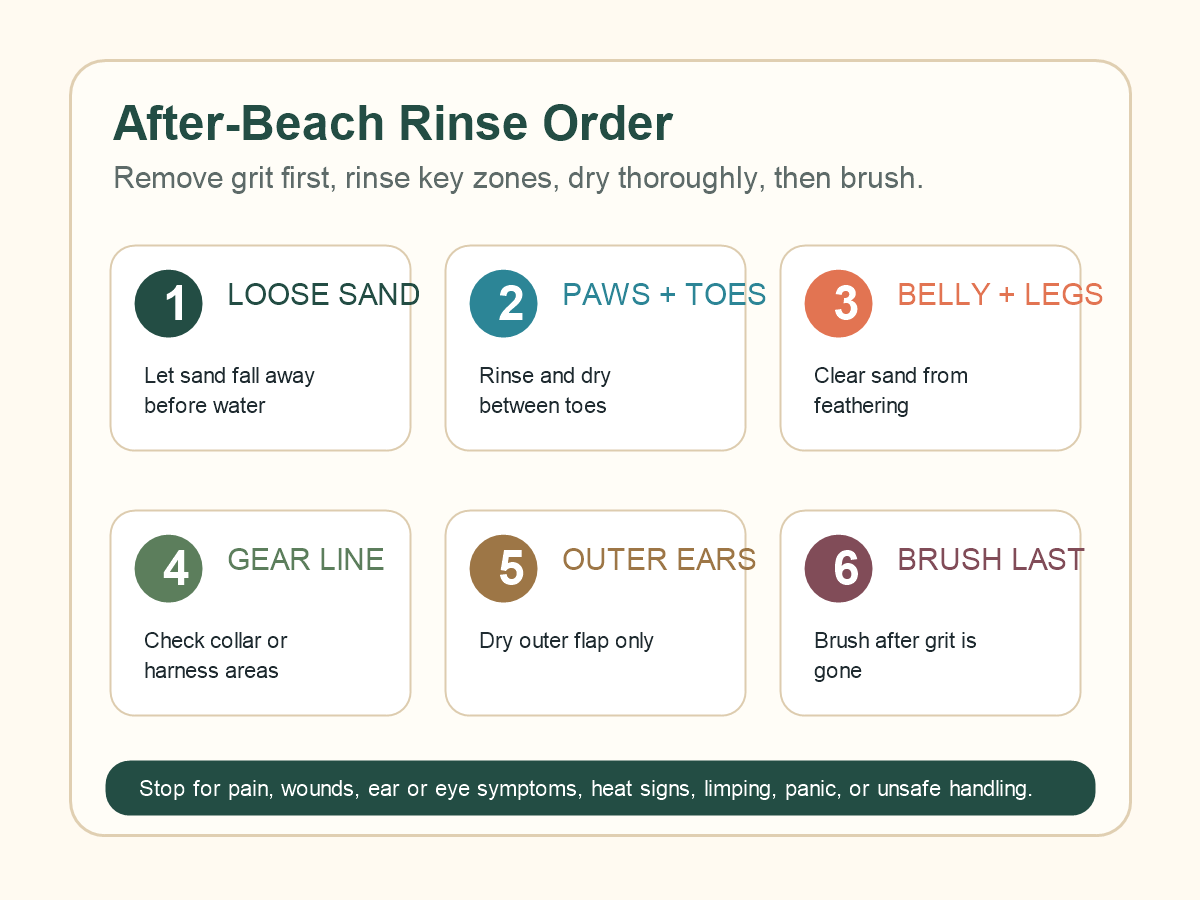
After a beach day, remove routine sand and salt before brushing. Rinse paws, belly, feathering, tail, and gear-contact areas, then dry thoroughly. This is grooming cleanup only, not medical or heat-illness advice.
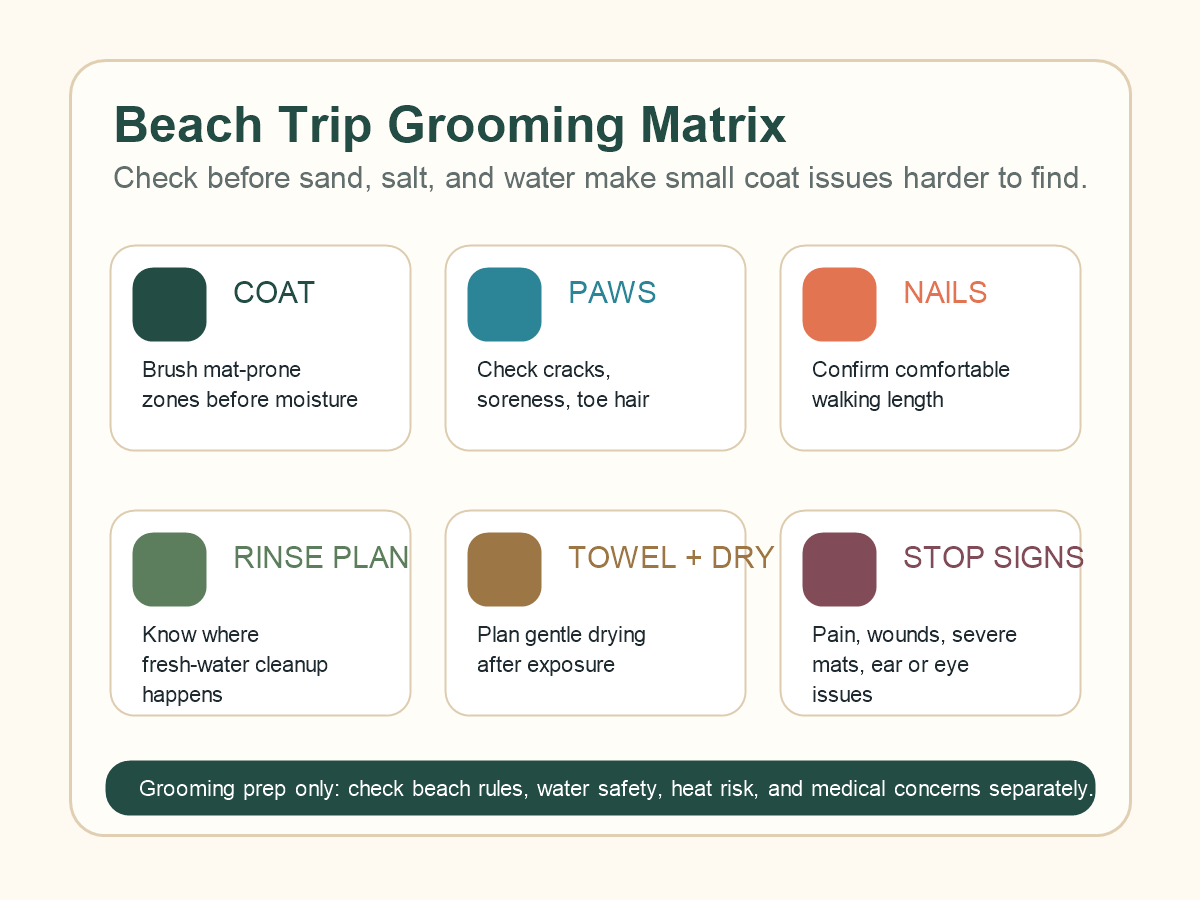
Before a beach trip, check your dog for coat tangles, paw soreness, nail comfort, and a practical rinse plan. This is grooming preparation only, not beach safety, heat, water-quality, or medical advice.
Use this matrix before beach exposure so small grooming issues are not hidden by sand, salt, or wet coat.
Check between the toes and around the paw pads for trapped hair, cracks, soreness, or anything that makes your dog pull away. Confirm nails are comfortable for walking.
Rinse And Drying Plan
Decide before leaving where fresh-water cleanup will happen when allowed and practical. Pack simple basics such as a towel, paw cloth, brush or comb, waste bags, and rinse water.
Do not shave for a beach trip, cut severe mats, treat wounds, mask odor with fragrance, or use grooming to make a risky outing feel manageable. Pause and ask for help if you see limping, pain, wounds, severe mats, skin irritation, ear symptoms, eye symptoms, panic, aggression, saltwater ingestion concerns, or heat-risk signs.
FAQ
Should I groom my dog before the beach?
Yes. Check coat, paws, nails, and mat-prone areas before sand and water make small issues harder to find.
Is this beach safety advice?
No. This is grooming prep only. Check beach rules, water conditions, heat risk, and medical concerns through appropriate current sources.
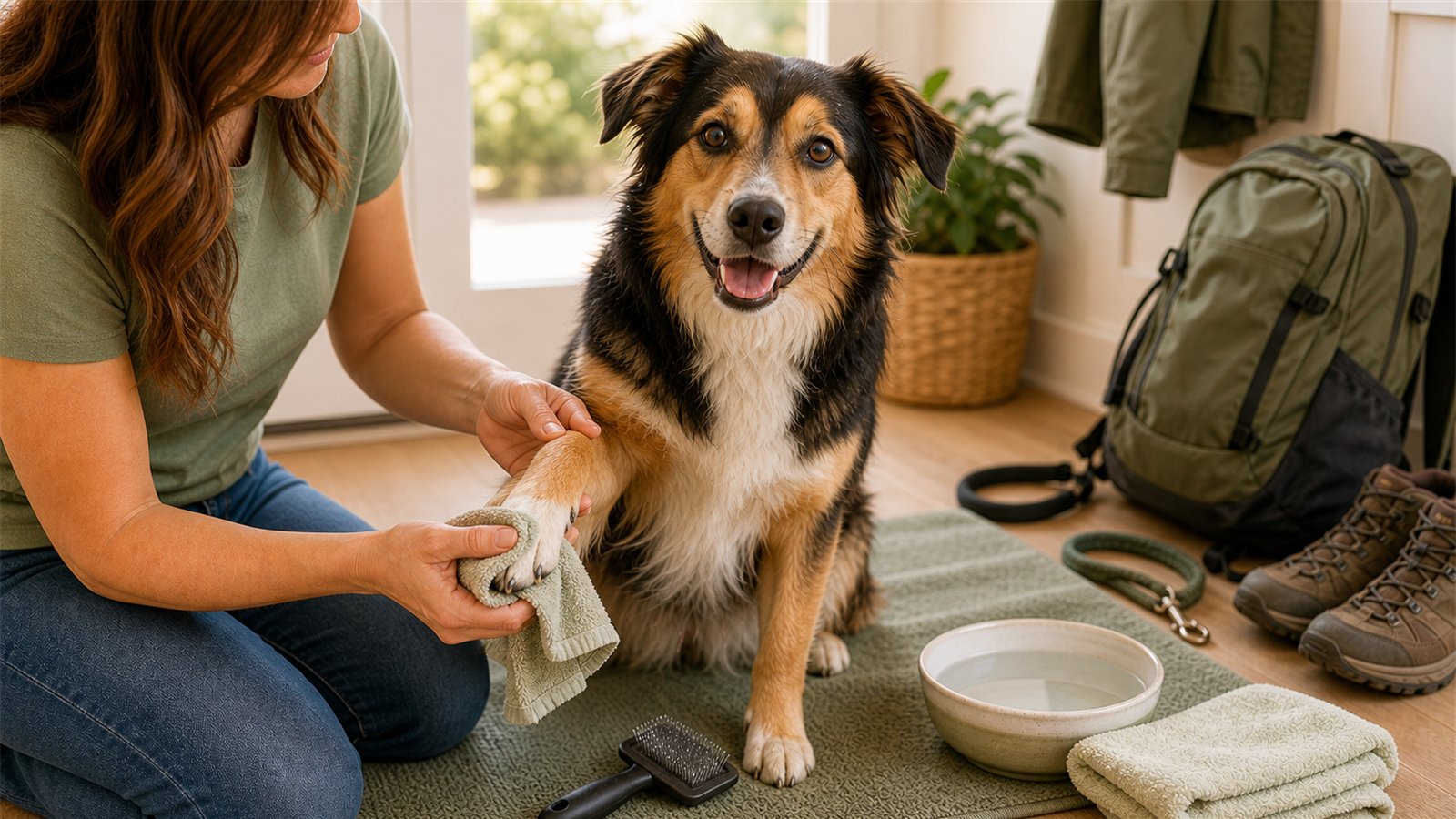
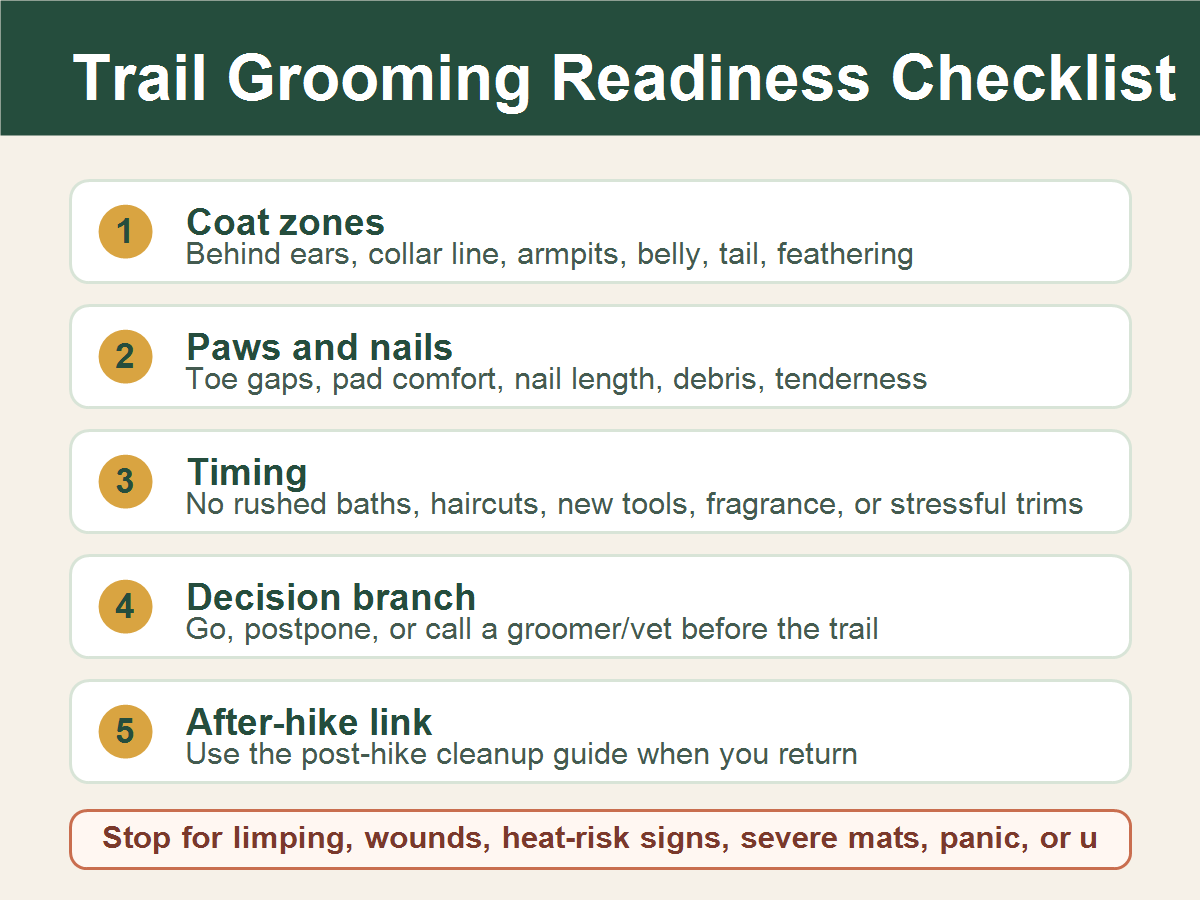
Before hiking, give your dog a short grooming check at home. Look at the coat, paws, nails, and debris-prone areas while your dog is calm and you have good light.
If a tangle is tight, painful, close to skin, or spread across a large area, do not cut it out before a hike. Use dog matting vs tangles to decide when to stop and call a groomer or veterinarian.
Stop and get qualified help for limping, wounds, strong pain signals, overheating risk, sudden sensitivity, severe mats, panic, aggression, or any handling situation that feels unsafe.
Bottom line
Dog grooming before a hiking trip should be short and calm: check coat zones, paws, nails, and debris-prone areas; skip stressful last-minute grooming; and stop when you see pain, wounds, overheating risk, severe mats, or unsafe handling.
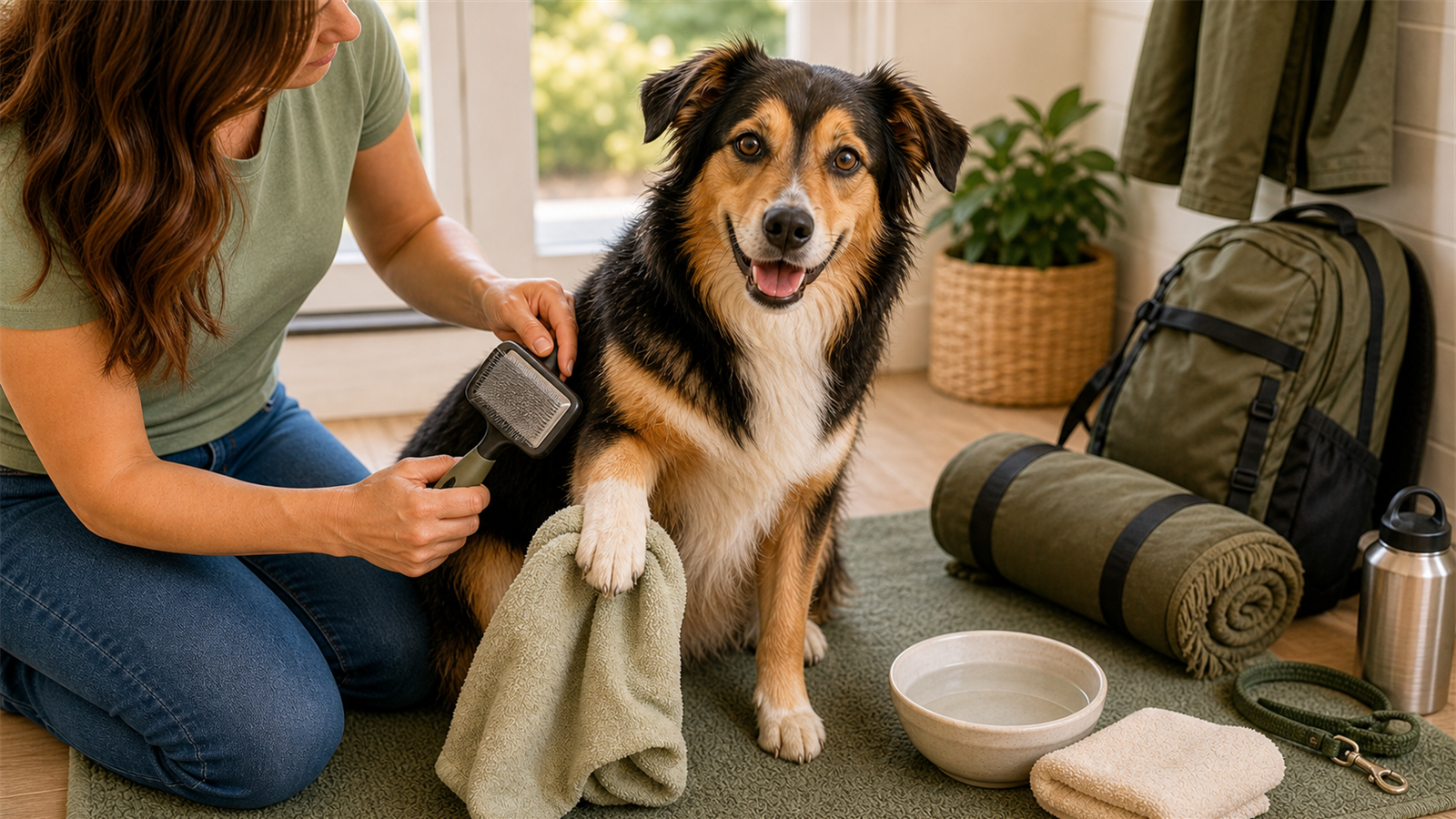
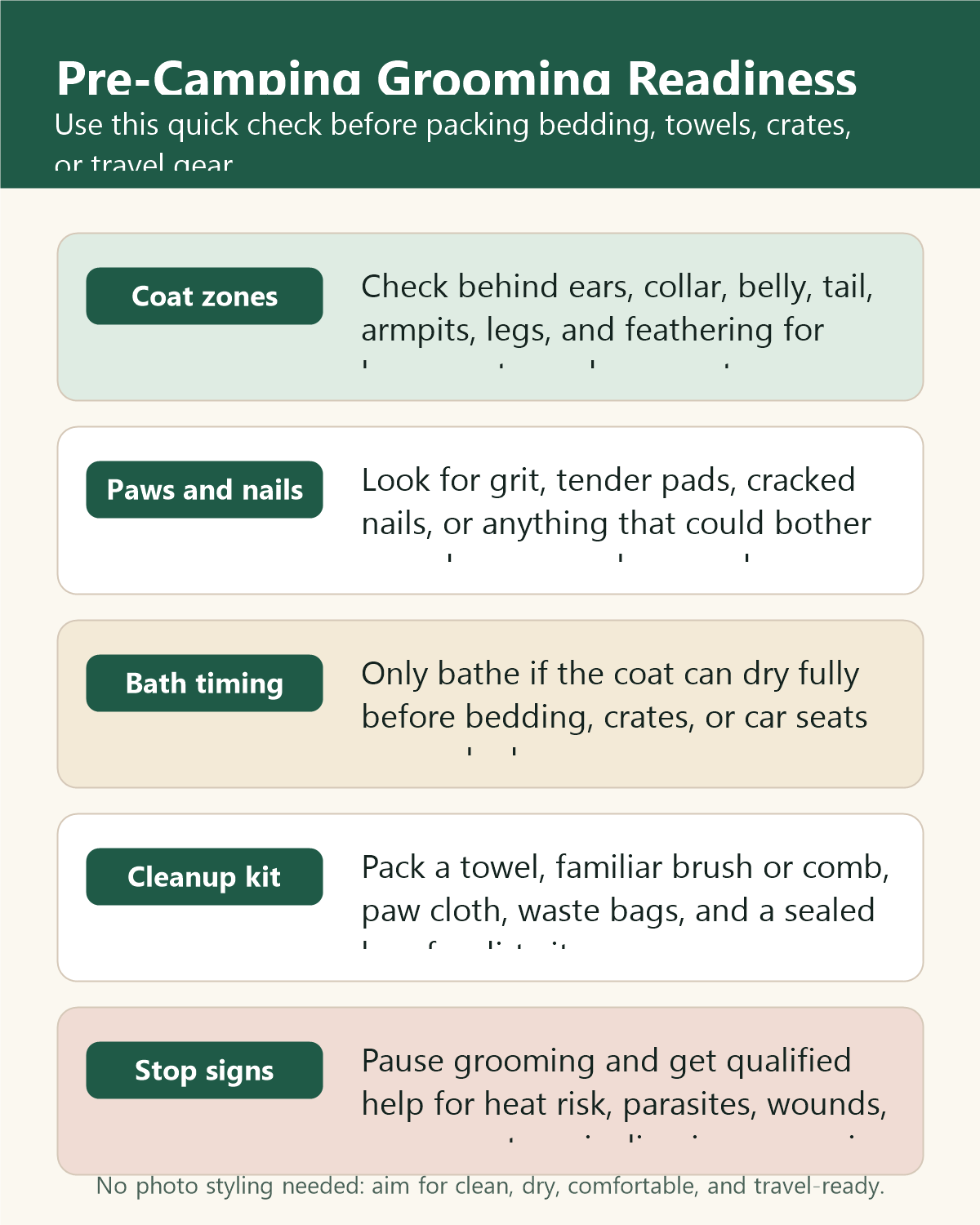
Before camping, prep your dog’s coat for debris checks, make paws and nails comfortable, bathe early enough for the coat to dry fully, and pack generic cleanup categories. Leave parasite treatment, tick removal, heat illness, injury care, wildlife safety, and campground-rule questions to qualified current sources.
Pre-camping grooming readiness map
Exposure
Grooming prep
Keep handy
Route out
Dirt and dust
Brush before the trip so you know the normal coat condition.
Familiar brush or comb and towel.
Skin irritation, pain, wounds, or unsafe handling.
Severe mats, embedded objects, or painful tangles.
Water and damp bedding
Bathe only with full dry time before packing bedding or travel items.
Dry towel or absorbent cloth.
Heat risk, illness, or skin symptoms.
Multi-day cleanup
Plan short daily checks instead of one stressful full groom.
Paw cloth, waste bags, and sealed dirty-item storage.
Parasites, limping, panic, aggression, or medication questions.
Coat checks for dirt, burrs, smoke, and bedding
Brush and comb before the trip so you know what is normal for your dog’s coat. Check behind the ears, collar area, belly, tail, armpits, legs, and any feathered areas that catch plant debris.
If you find severe mats or painful tangles, do not cut them at home before departure. Use the dog matting vs tangles guide for stop signs, then route severe or painful coat problems to a professional groomer or veterinarian.
Avoid shaving or over-trimming for camping unless a veterinarian or professional groomer has advised it for your dog. Coat changes can affect comfort and protection, and this page does not provide breed-specific clipping instructions.
Paw and nail prep before rough ground
Check paws and nails before leaving. Nails that are too long can make rough ground, tent platforms, stairs, or slick surfaces less comfortable. Paw hair that mats or traps debris may need professional help if you cannot manage it safely.
If paws are dirty before or during the trip, keep cleanup gentle and simple. Use the dog paw cleaning guide for a fuller routine when conditions are calm and safe.
If you see limping, pain, wounds, swelling, embedded objects, or heat-risk signs, stop and contact a veterinarian.
Bath timing and what to skip
If your dog needs a bath, do it before the trip with enough drying time. ASPCA dog grooming guidance supports brushing before bathing, careful rinsing, and drying. That matters before camping because damp coats and bedding can make odor and skin comfort harder to manage.
Skip last-minute major grooming, heavy fragrance, harsh restraint, severe mat cutting, and any unfamiliar tool work right before departure.
Generic campsite cleanup categories
Keep cleanup non-commercial and simple: towel or absorbent cloth, familiar brush or comb, paw cloth and clean water where allowed and safe, waste bags, sealed storage for dirty items, and a washable bedding cover or barrier if allowed.
These are generic categories, not product recommendations. AKC camping guidance is useful for broad camping planning context, while CDC pet travel guidance is useful for keeping travel safety separate from grooming. This page stays in the grooming lane.
Parasite, heat, injury, and rule boundaries
This guide does not teach tick removal, parasite prevention or treatment, wildlife safety, campsite legal advice, heat-stress treatment, wound care, or severe-mat cutting. Check with your veterinarian about parasite concerns and ask the campground or relevant authority about current rules.
Call a veterinarian, professional groomer, or qualified trainer for parasites, wounds, heat-risk signs, severe mats, pain, limping, panic, aggression, unsafe handling, sedation, or anxiety medication questions.
Bottom line
Good dog grooming before camping is preparation, not product shopping. Check the coat before debris becomes hard to find, make paws and nails comfortable, bathe only with full drying time, and keep campsite cleanup basic.
FAQ
Should I groom my dog before camping?
Yes. Focus on coat checks, paw and nail comfort, and bath timing so your dog starts the trip clean, dry, and easier to inspect.
Should I bathe my dog before a camping trip?
Only if there is enough time for complete drying and your dog tolerates baths. A damp coat can make bedding and odor harder to manage.
Should I trim my dog’s fur before camping?
Do not make major coat changes without professional guidance. Remove easy tangles, but route severe mats or risky trimming to a professional.
What grooming supplies should I bring camping?
Think in generic categories: drying cloth, familiar brush or comb, paw cloth, waste bags, and sealed storage for dirty items.
Does this include tick removal or parasite treatment?
No. Tick and parasite wording here is check/referral only. Ask your veterinarian for prevention, removal, or treatment advice.
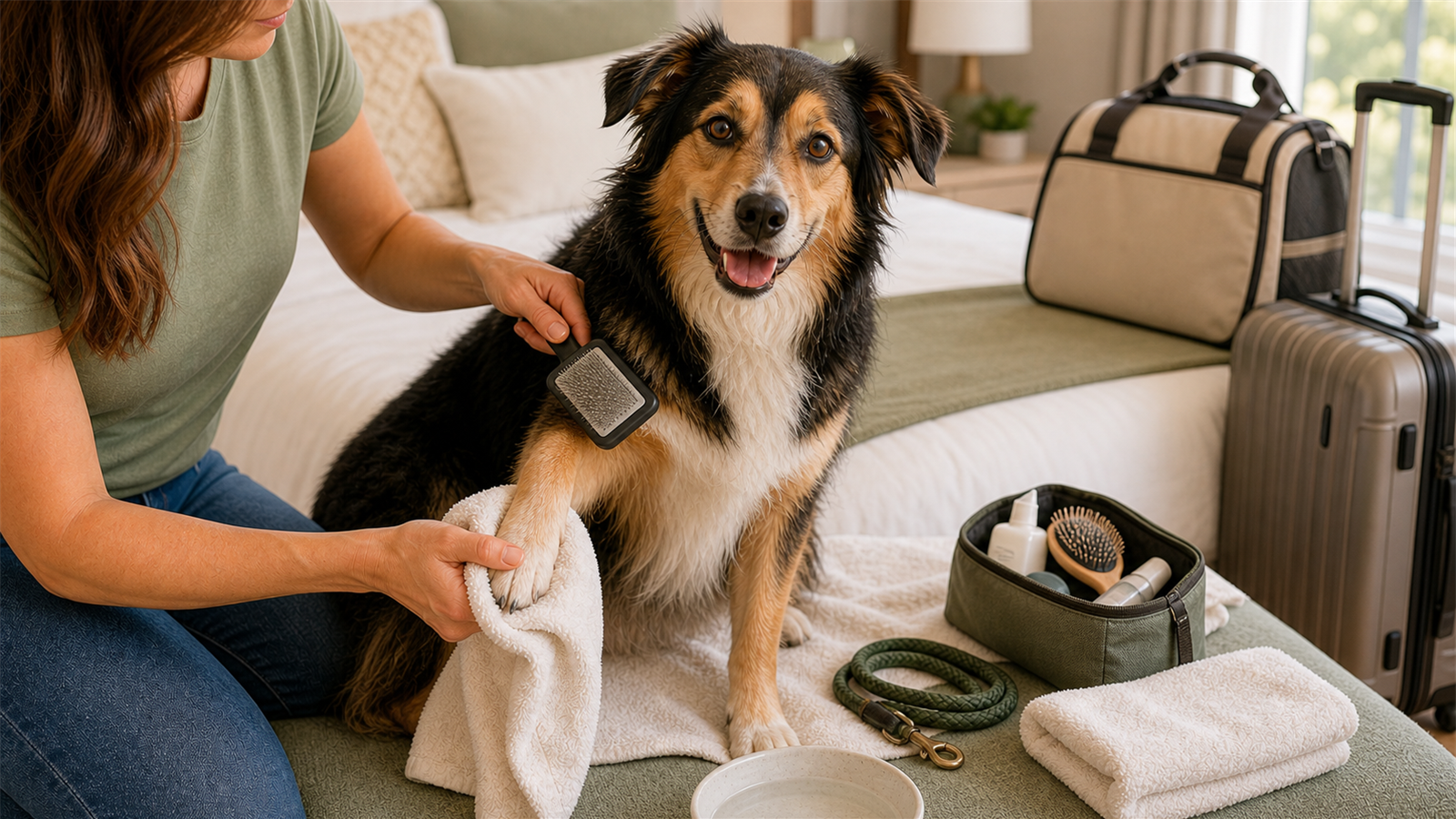
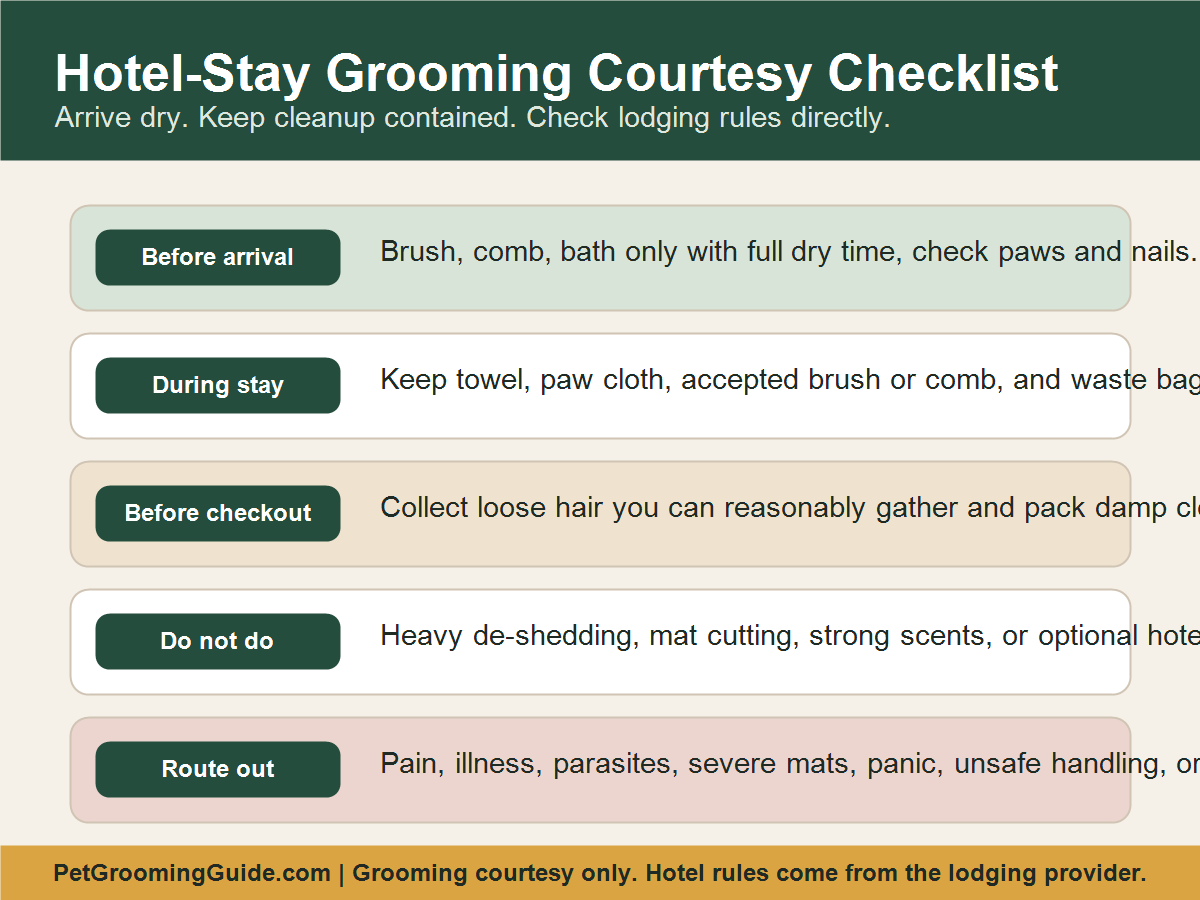
Before a hotel stay, groom early enough for a dry coat, reduce loose hair, check paws and nails, and keep generic cleanup supplies handy. Hotel rules, fees, deposits, cleaning expectations, and pet policies vary, so check the current lodging policy directly instead of treating any grooming checklist as policy advice.
Hotel-stay grooming courtesy checklist
Stage
Grooming task
Cleanup goal
Boundary
Before arrival
Brush, comb, bathe only with full drying time, and check paws and nails.
Arrive with a dry coat, less loose hair, and cleaner paws.
ASPCA dog grooming guidance supports regular brushing and careful bathing, rinsing, and drying. For hotel prep, that means grooming should happen before the travel rush, not in a cramped bathroom after check-in.
Check the collar area, tail, belly, feet, and any places that collect debris. If you find severe mats, pain, wounds, parasites, or skin irritation, contact a veterinarian or professional groomer instead of trying to fix it in a hotel room.
Coat, shedding, odor, paws, and nails
Hotel grooming prep should make the stay easier for your dog and cleaner for the room. Remove loose hair and small tangles before travel. Brush at home so less hair lands in the room. Wipe dirt from paws before entering when practical.
For paw cleanup, use the dog paw cleaning guide when you have time for the full routine. For shedding, use the loose dog hair guide before the trip, not after loose hair is already spread through the room.
Do not mask strong or unusual odor with fragrance. Odor that seems painful, sudden, or persistent belongs with a veterinarian instead of a hotel-room workaround.
What to keep in the room
Keep a few generic items accessible: towel, paw cloth, brush or comb your dog already accepts, waste bags, and a sealable bag for damp cloths. Bring only items that are allowed by the lodging policy and practical for your dog.
CDC pet travel guidance is a useful reminder that travel with pets has safety considerations, but this page stays focused on grooming courtesy. CDC pet-supply cleaning guidance also supports using safe cleanup habits around pet items. Neither replaces hotel rules.
What not to do in a hotel bathroom or room
Avoid optional baths, heavy de-shedding, mat cutting, unfamiliar tools, strong scents, and messy grooming unless it is truly necessary and allowed. Do not use hotel towels or surfaces in ways that conflict with the current lodging policy.
If a grooming task is optional and messy, save it for home. If it is urgent because of pain, parasites, wounds, severe mats, panic, aggression, or unsafe handling, route it to qualified help.
How this differs from general travel prep
A hotel stay adds a room-courtesy layer. You are managing your dog’s comfort while also keeping cleanup contained. For broader trip timing, use the dog grooming before travel guide.
Hotel policy and safety boundaries
This guide does not make legal, fee, deposit, property-damage, accommodation, or policy claims. Check the current lodging policy directly.
Call a veterinarian, professional groomer, or qualified trainer for illness, heat-risk concerns, pain, wounds, severe mats, parasites, panic, aggression, unsafe handling, or medication questions.
Bottom line
Good grooming before a hotel stay is simple: arrive with a dry coat, reduce loose hair before the trip, check paws and nails, keep a compact cleanup set accessible, and check hotel rules directly.
FAQ
Should I bathe my dog before a hotel stay?
Only if your dog can dry fully before arrival and bathing does not create stress. Otherwise, focus on brushing, paw checks, and odor disclosure if something seems abnormal.
How do I reduce dog hair in a hotel room?
Brush before leaving, keep a generic cloth or towel accessible, and contain loose hair as part of normal cleanup. Do not turn the room into a grooming station.
What grooming supplies should I bring to a hotel?
Bring generic basics such as a towel, paw cloth, brush or comb, waste bags, and a sealable bag for damp items, if allowed by the lodging policy.
Can I wash my dog in a hotel bathroom?
Check the current lodging policy directly. This article does not interpret hotel rules or fees.
Is this hotel policy or fee advice?
No. It is grooming courtesy and cleanup planning only.
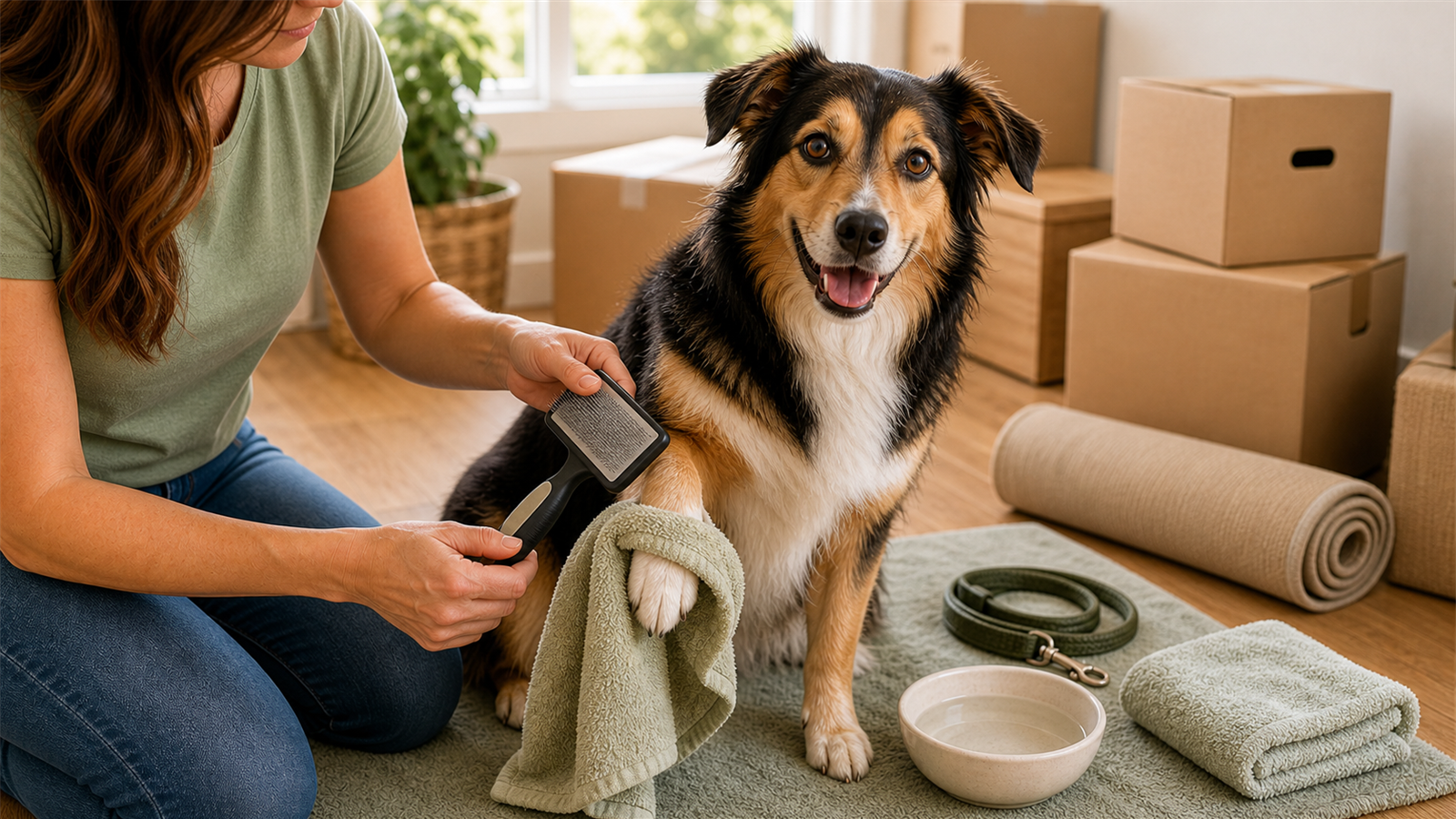
Before moving house, finish grooming early, keep your dog clean and fully dry, and leave a small first-night cleanup kit where you can reach it. Moving day is not the time for a rushed bath, heavy de-shedding, new grooming tool, or stressful nail trim.
This guide covers grooming logistics only. For travel documents, housing rules, ID details, microchip records, health requirements, medication, anxiety treatment, or transport rules, check your current providers, veterinarian, carrier, landlord, or relevant authority.
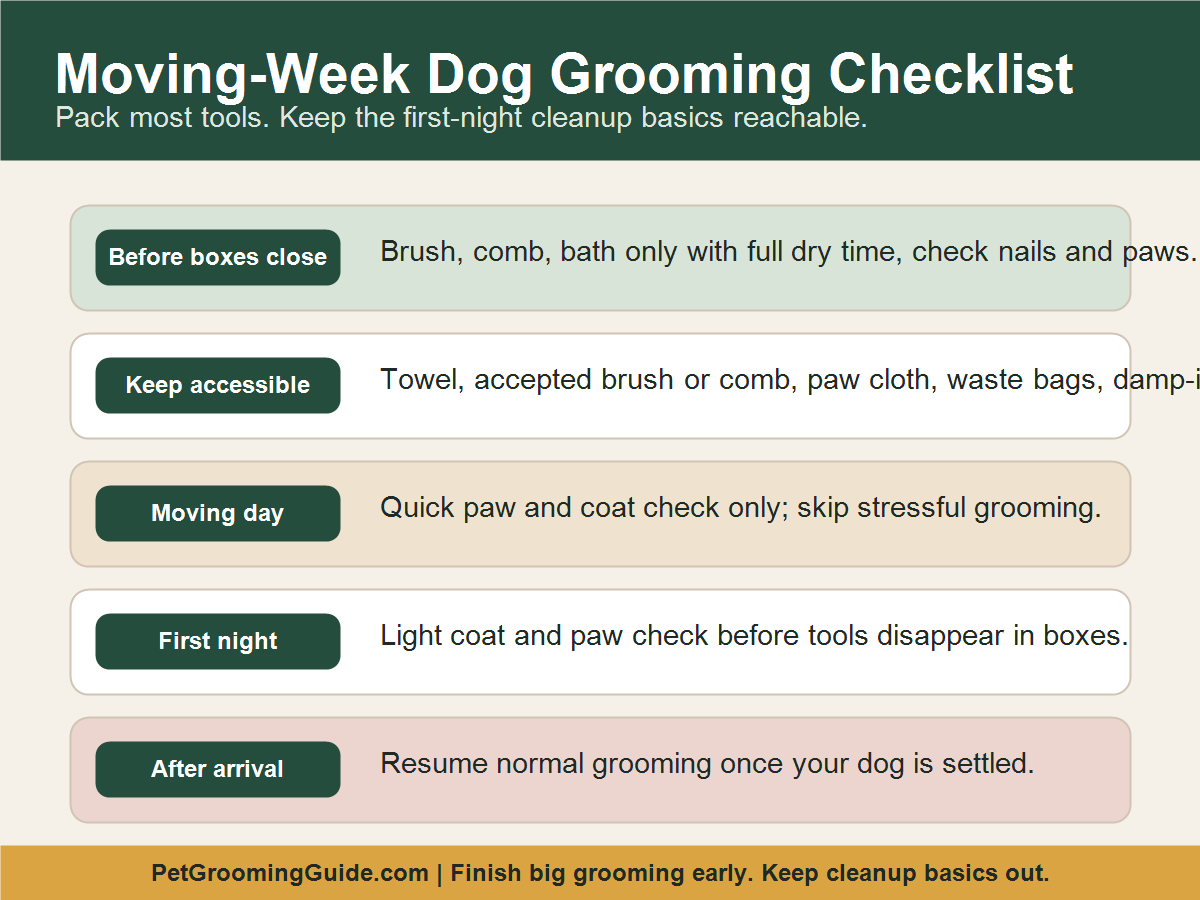
Moving-week grooming timeline
Timing
Grooming task
Keep accessible
Postpone
Before boxes close
Brush, comb, check mats, plan bath timing, and check nail or paw comfort.
Your dog’s normal brush or comb, towel, paw cloth, and waste bags.
New grooming tools, optional style changes, or anything your dog finds stressful.
Two to three days before
Finish baths or messy coat work only if your dog can dry fully and recover calmly.
A simple cleanup bag for moving day.
Rushed nail trims, severe mat work, or heavy de-shedding on moving day.
Moving day
Quick paw and coat check only. Keep grooming quiet and brief.
Towel, paw cloth, waste bags, damp-item bag, and any records your provider asked for.
Bathing, new products, stressful brushing, or anything that adds pressure.
First night
Light coat and paw check before unpacking everything.
One towel, one familiar brush or comb, and a place for damp cloths.
Full grooming reset until your dog is settled.
What to do before supplies get packed
Brush and comb before grooming tools disappear into boxes. Look for mats, burrs, skin irritation, odor, or sensitive areas. If you bathe your dog, do it early enough for complete drying before the move.
ASPCA dog grooming guidance supports basic brushing, careful bathing, rinsing, and drying. For moving week, that means a bath belongs before the final packing rush, not when towels and calm drying space are already gone.
Do not save big grooming jobs for moving day. A rushed bath, nail trim, or mat session can add stress when the house is already noisy and disrupted.
Coat, paws, nails, odor, and shedding checks
Use grooming as a comfort check. Look for loose hair, tangles, paw debris, nails catching on floors, and odor that does not seem like normal dirt.
For paw cleanup, keep the plan simple. If your dog gets dusty while boxes move in and out, a quick wipe and dry check may be enough. Use the dog paw cleaning guide when you have more time.
For shedding, do steady brushing before the move. The loose dog hair guide can help when shedding is the main issue and your dog is calm enough for a normal session.
What to keep accessible on moving day
Keep a small generic grooming cleanup set where you can reach it: towel or absorbent cloth, a brush or comb your dog already accepts, paw cloth, waste bags, and a sealable bag for damp or dirty cloths.
The CDC’s pet-supply cleaning guidance is a useful reminder to handle washable items safely and follow label directions when cleaning pet supplies. You do not need a product-heavy kit for moving day; you need a few familiar basics that are not buried in a box.
What to postpone until after arrival
Postpone non-urgent grooming that could create stress, such as a new haircut, unfamiliar tool introduction, major de-shedding session, or optional bath. If the dog is muddy after the move, do the least needed cleanup first, then return to the full routine later.
This page does not provide legal, transport, housing, escape-prevention, medical, or microchip-compliance instructions. Check your own records and current providers for travel documents, housing rules, ID details, and health requirements.
Contact a veterinarian, professional groomer, or qualified trainer for injury, illness, heat-risk concerns, severe mats, pain, aggression, panic, unsafe handling, anxiety medication, or sedation questions.
Bottom line
Good dog grooming before moving house is mostly timing. Finish big grooming early. Keep a tiny cleanup kit accessible. Keep moving day grooming minimal. Resume the normal routine after your dog has a chance to settle in the new space.
FAQ
Should I groom my dog before moving house?
Yes, basic grooming helps your dog move with a clean, dry coat and comfortable paws. Keep it calm and finish major tasks before moving day.
When should I bathe my dog before moving day?
Bathe a few days ahead if your dog tolerates baths and the coat can dry fully. Do not bathe on moving day unless it is truly necessary.
What grooming supplies should stay out during a move?
Keep generic basics accessible: towel, brush or comb, paw cloth, waste bags, and a sealable bag for damp items.
Should I trim my dog’s nails before moving?
Check nail comfort ahead of time. If nail handling is stressful or risky, schedule professional help instead of rushing.
Is this moving, legal, or transport advice?
No. This is grooming logistics only. Check current providers, owner records, and relevant authorities for non-grooming requirements.
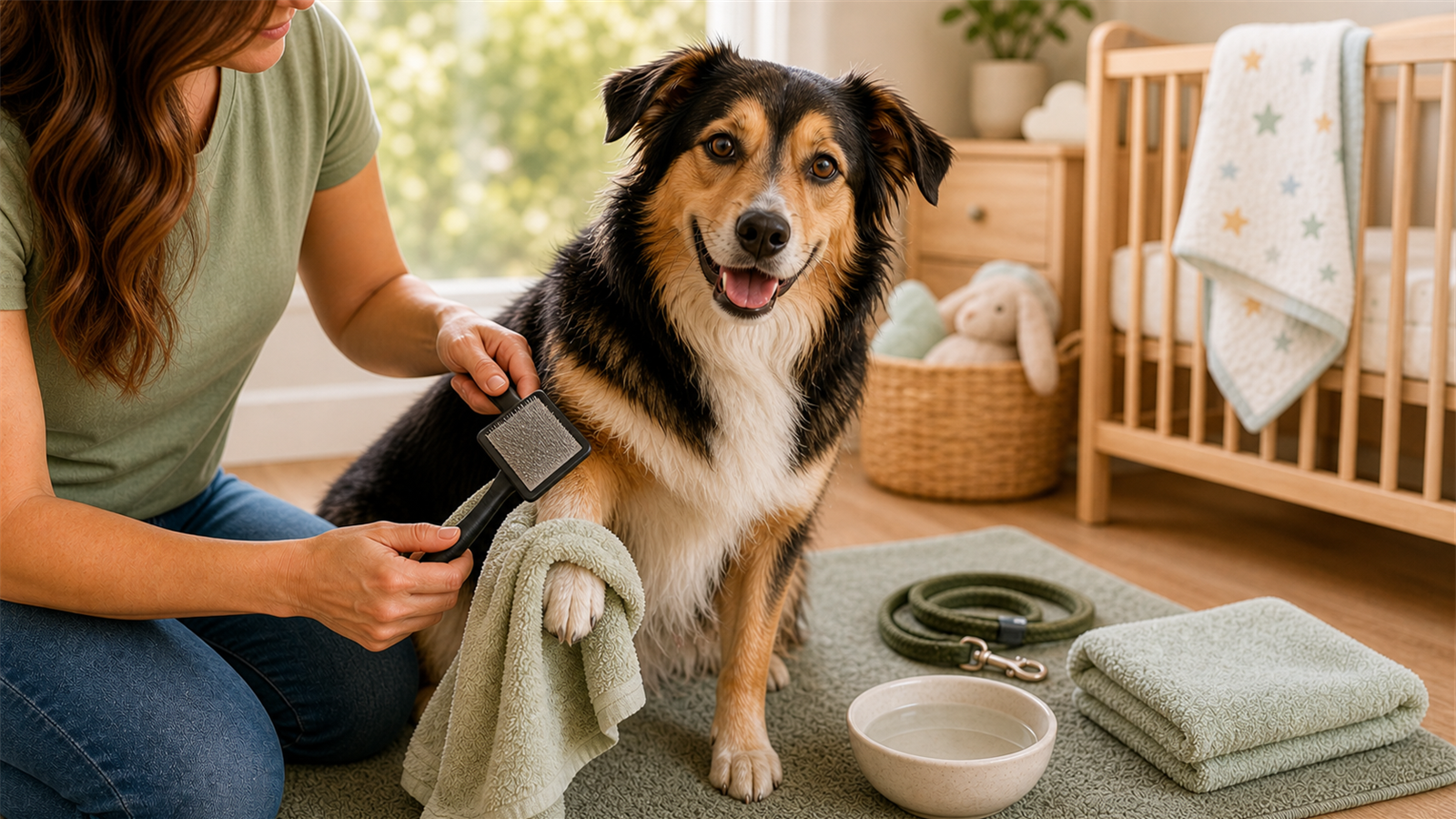
Before a new baby arrives, move your dog’s grooming onto a calm, predictable schedule early. Finish bigger coat, nail, paw, shedding, and odor tasks before the household changes, and keep baby safety, bite risk, medical concerns, and behavior training outside the grooming plan.
This is grooming routine advice only. For infant safety, dog-baby introductions, guarding, panic, aggression, medication, illness, wounds, or bite risk, work with qualified professionals such as your veterinarian, a credentialed trainer, and current child-safety resources.
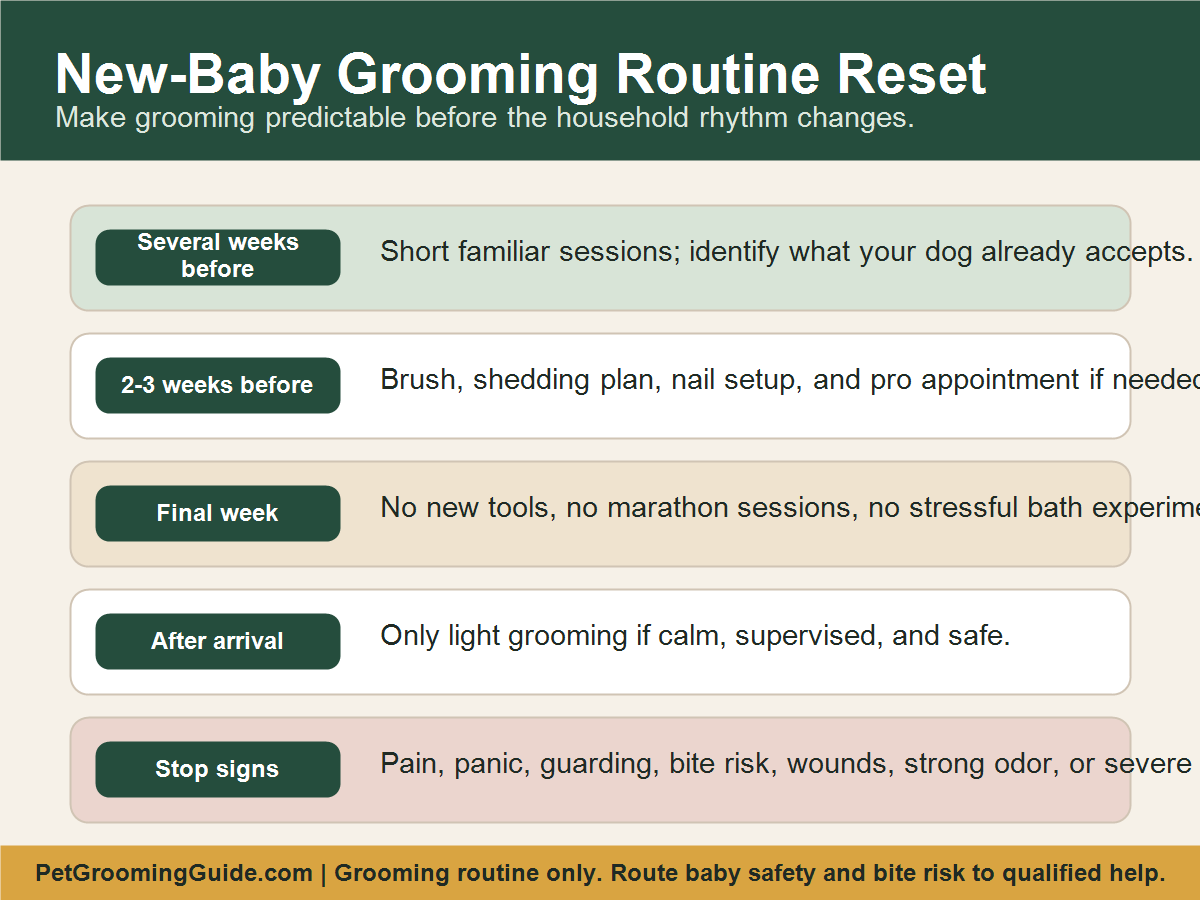
Baby-arrival grooming routine reset timeline
Timing
Grooming goal
Keep it calm
Route out
Several weeks before
Identify what grooming your dog already tolerates: brushing, paw handling, towel drying, and quiet coat checks.
Use short familiar sessions in the same quiet place.
Panic, guarding, snapping, bite risk, wounds, severe mats, or sudden pain.
Two to three weeks before
Handle shedding, coat checks, nail planning, and any professional appointment if needed.
Avoid marathon sessions. Stop while the dog is still coping.
Medical odor, discharge, skin symptoms, unsafe handling, or professional grooming needs.
Final week
Light brushing, paw checks, written routine notes, and bedding or towel cleanup.
No brand-new tools, loud equipment, forced nail trims, or stressful bath experiments.
Dog-baby safety questions, medication questions, aggression, or bite concerns.
After arrival
Maintain only brief grooming that stays calm, supervised, and easy to stop.
Let the household settle. Skip non-urgent grooming if timing is unsafe.
Any situation where supervision, handling, or dog body language feels unsafe.
What to stabilize before the due date
Prioritize grooming tasks that reduce daily friction: brushing, basic coat checks, nail planning, paw comfort, shedding control, and bath timing. The goal is not to make your dog perfect. The goal is fewer surprise grooming problems during the busiest weeks.
ASPCA dog grooming guidance supports regular brushing, careful bathing, rinsing, and drying. For a family expecting a baby, that means routine work should happen early enough that the dog is dry, rested, and not learning a stressful new process right before the household changes.
Write down what your dog accepts and what creates stress. This note can help family members keep grooming consistent after the baby arrives.
Coat, nail, paw, odor, and shedding priorities
For the coat, use regular brushing to find mats, irritation, or sore spots. For nails and paws, plan ahead if your dog resists foot handling. Our dog nail trimming setup checklist can help you decide whether nail work is calm enough to do at home.
For shedding, use steady brushing instead of a sudden over-grooming session. If loose hair is the main problem, use the loose dog hair guide when you have time to work calmly.
For odor, separate normal dirt from possible skin, ear, dental, or anal gland concerns. Strong, painful, or sudden odor should be routed to a veterinarian instead of covered with fragrance.
How to avoid making grooming feel like a new stressor
Keep sessions short and predictable. Use the same quiet place, the same basic tools, and the same gentle sequence when possible. Avoid introducing noisy equipment, long restraint, or unfamiliar handling right before the baby arrives.
If you need to introduce a brush, comb, towel, or dryer routine, do it gently and early. Our guide to introducing grooming tools keeps that work separate from the last-minute baby countdown.
What not to force, mask, or postpone
Do not force nail trims, mat removal, baths, ear cleaning, or brushing if your dog is showing fear or pain. Do not postpone severe mats, skin problems, ear odor, wounds, or sudden sensitivity until after the baby arrives. Do not use medication, sedatives, or behavior plans unless directed by your veterinarian or qualified professional.
If your dog shows panic, growling, snapping, guarding, or bite risk around handling, stop the grooming session. Use the dog grooming anxiety signs guide to identify warning signs, then route the concern to qualified help.
When this becomes trainer, vet, or child-safety territory
Use grooming only for grooming. Dog-baby introductions, infant supervision, guarding, bite risk, sleep-space boundaries, and household safety routines need current guidance from qualified people and sources.
The ASPCA’s dogs and babies resource is a useful starting point for understanding that a new baby brings new sounds, smells, routines, and household changes. This page does not replace professional baby-safety, dog-training, or veterinary advice.
Bottom line
Good dog grooming before a new baby is calm, early, and limited. Make routine grooming predictable before the household changes. Finish coat, nail, paw, odor, and shedding basics ahead of time. Stop when grooming becomes unsafe, painful, or behaviorally concerning.
FAQ
Should I groom my dog before bringing home a baby?
Yes, if grooming can stay calm and familiar. The goal is a comfortable coat, manageable shedding, and fewer last-minute tasks.
When should I schedule grooming before the due date?
Schedule major grooming early enough that your dog has time to rest and you have time to address any mat, skin, nail, or handling concerns.
How can I reduce shedding before a baby arrives?
Use regular brushing and coat checks. Avoid sudden over-grooming or unfamiliar tools right before the baby arrives.
What if my dog hates grooming before the baby comes?
Stop before the situation escalates. For fear, aggression, bite risk, or unsafe handling, ask a qualified trainer or veterinarian.
Is this dog-and-baby safety training advice?
No. This is grooming routine advice only. Child-safety and dog-baby interaction guidance must come from qualified, current resources.
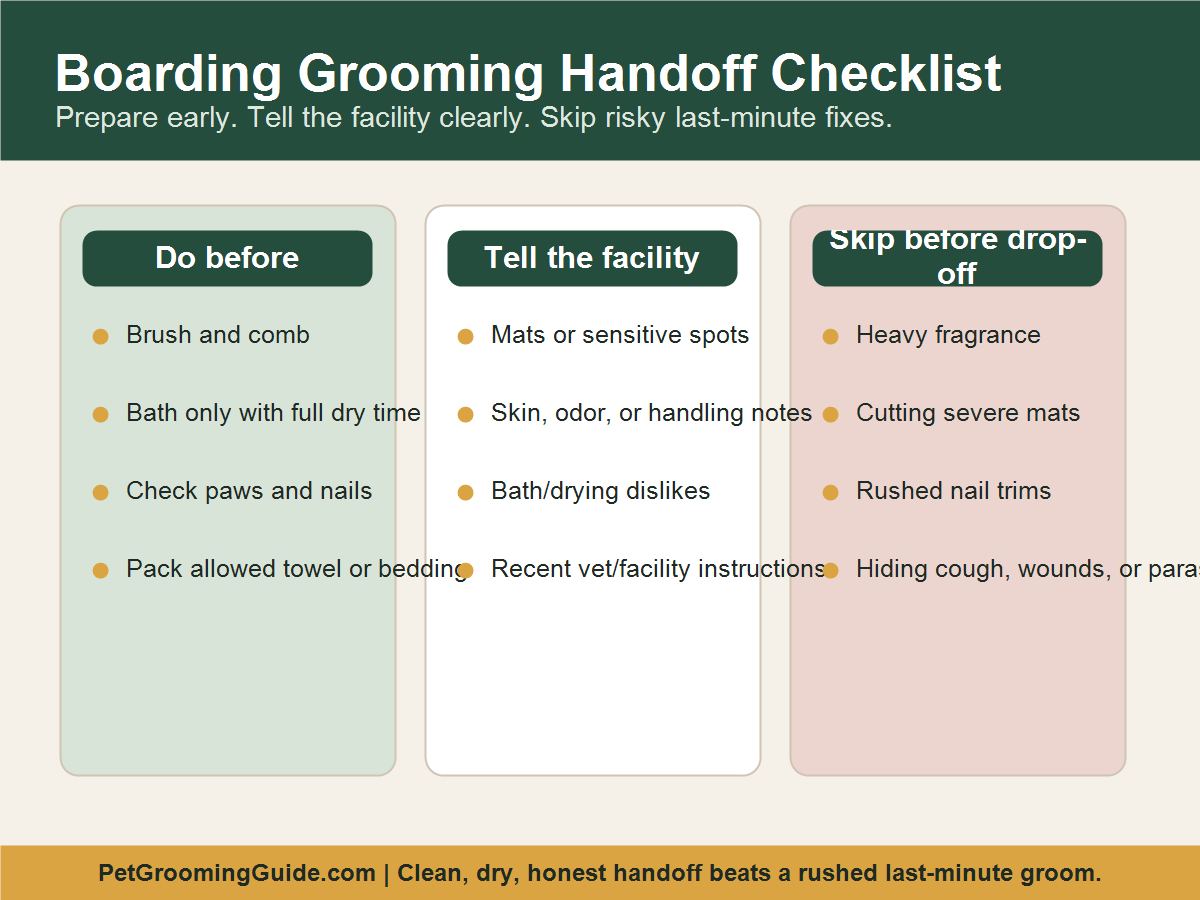
Groom your dog before boarding early enough that the coat is clean, fully dry, and comfortable at drop-off. The goal is not to hide problems or guess facility rules. The goal is to finish basic coat, paw, nail, and odor prep, then give the boarding team honest handoff notes.
This guide covers grooming timing only. For vaccine records, parasite prevention, illness, coughing, medication, sedation, anxiety treatment, or facility rules, check directly with your veterinarian and the boarding facility.
Boarding grooming timeline
Timing
Routine grooming tasks
Tell the facility
Skip before drop-off
Several days before
Brush and comb the coat, check mats, plan a bath if needed, and book professional help if the coat is beyond easy home care.
Mats, sensitive spots, grooming dislikes, and any recent skin or odor concern already discussed with your vet.
Cutting severe mats, trying new tools, or forcing a full groom your dog does not tolerate.
One to two days before
Bathe only if your dog handles baths calmly and has enough time to dry fully. Check paws, nails, collar area, belly, and tail.
Whether your dog dislikes bathing, drying, feet, ears, brushing, or tail handling.
Strong fragrances, harsh restraint, or anything that leaves the dog damp or upset.
Drop-off day
Keep grooming minimal. Do a quick coat and paw check, pack allowed washable items, and bring written notes.
Allowed bedding or towel, sensitive areas, mat locations, and facility-requested records.
Rushed nail trims, heavy detangling, bathing, symptom masking, or rule guessing.
What to finish several days before drop-off
Start with brushing and combing. Work in small sections so you can find tangles before they become a boarding problem. Check behind the ears, under the collar, armpits, belly, tail base, legs, and any place a harness or bedding may rub.
If the coat has severe or extensive mats, do not cut them out at home before drop-off. Route that to a professional groomer or veterinarian, especially if the skin looks irritated or the dog reacts with pain. Our dog matting vs tangles guide can help you decide when a tangle has moved beyond routine brushing.
If you bathe, brush first, use lukewarm water, rinse carefully, and dry the coat fully. ASPCA dog grooming guidance supports brushing before bathing and careful bath handling, which is why boarding baths should be planned early instead of rushed.
What to check the night before
The night before boarding is for quiet checks, not a full grooming reset. Look at paws and between toes, nail comfort on hard floors, collar and harness contact areas, tail, belly, armpits, and behind the ears.
Odor matters too. Normal outdoor smell may improve with brushing, a properly timed bath, and clean bedding. Strong, sour, painful, or unexplained odor should not be covered with fragrance. Treat it as a reason to call your veterinarian or speak with the boarding facility before drop-off.
What to tell the boarding facility
Give the facility honest grooming and handling notes. Tell them where mats, tangles, or sensitive spots are located. Tell them whether your dog dislikes feet, ears, tail handling, brushing, bathing, or drying. If your dog has grooming stress signs, share those clearly. Our dog grooming anxiety signs guide can help you name what you are seeing.
Only pack generic washable items the facility allows, such as a towel or bedding. The CDC’s cleaning guidance for pet supplies is a useful reminder that pet items should be washable and handled safely, but each boarding facility may have its own rules.
What not to hide, mask, cut, or treat
Do not use grooming to hide a problem from the boarding team. Avoid heavy fragrance, last-minute mat cutting, unfamiliar products, harsh restraint, rushed nail trims, or bathing a dog who is already stressed or unwell.
Do not try to solve coughing, wounds, parasites, pain, medication questions, or illness through grooming. Dogs in close-contact settings can share illness, and boarding facilities may have their own health intake process. Treat health and policy questions as veterinarian-and-facility topics.
How boarding prep differs from travel prep
Boarding prep has a handoff layer. You are not only getting your dog clean and dry; you are giving another care team useful information. For broader trip timing, use the dog grooming before travel guide. For boarding, prioritize honest notes, allowed items, and clear stop signs.
Bottom line
Good dog grooming before boarding is early, simple, and honest. Brush and check the coat several days ahead. Bathe only with full dry time. Keep drop-off day light. Tell the facility about mats, sensitive spots, odor, handling worries, and anything your veterinarian or facility needs to address.
FAQ
Should I bathe my dog before boarding?
Only if your dog tolerates bathing and there is enough time for the coat to dry fully before drop-off. If bathing creates stress or leaves the coat damp, skip the bath and share any concerns with the facility.
How soon before boarding should I groom my dog?
Do coat checks several days ahead. Leave the final day for light brushing, paw checks, and written handoff notes.
Should I trim nails before boarding?
Check nail comfort ahead of time. If your dog resists nail handling or the quick is hard to judge, use a professional instead of rushing a trim before drop-off.
What should I tell a boarding facility about mats or skin issues?
Tell them where the issue is and whether your dog is sensitive there. For severe mats, pain, redness, wounds, discharge, coughing, or parasites, contact a veterinarian or professional groomer before boarding.
Is this boarding vaccine or facility policy advice?
No. Check the current boarding facility policy directly and ask your veterinarian about vaccine, parasite, illness, or medication questions.
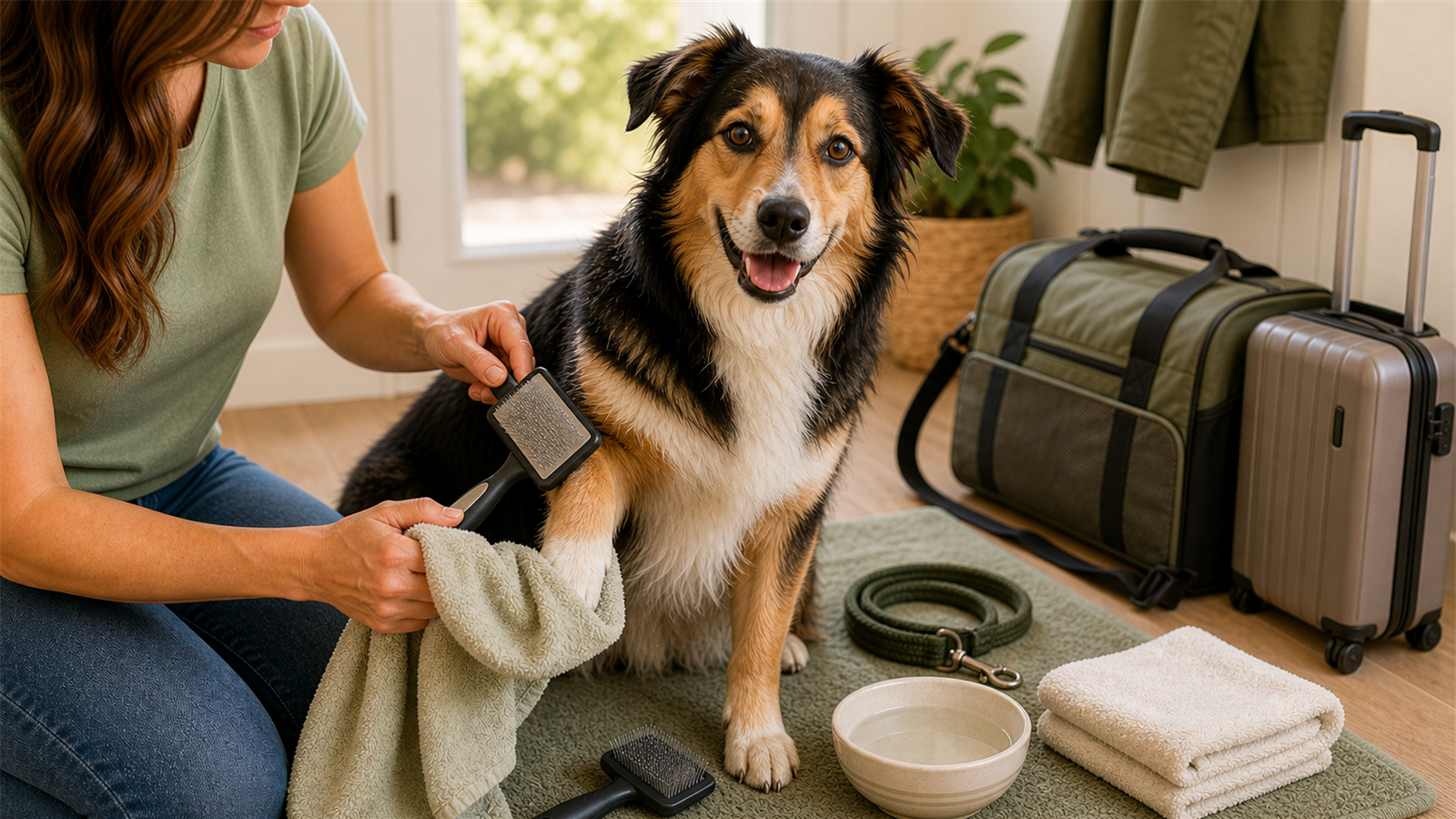
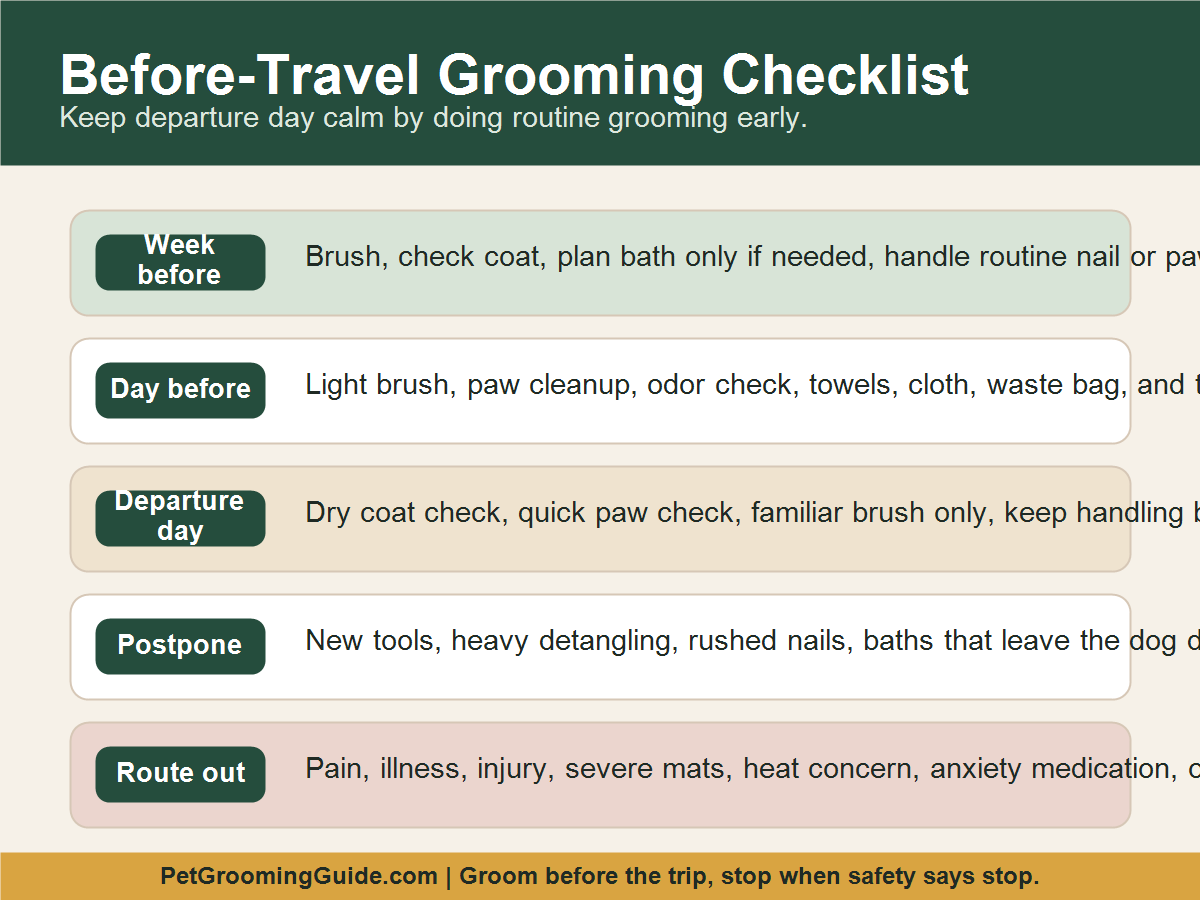
Before travel, keep grooming calm and early. The goal is not a perfect coat at the door. It is a clean, dry, comfortable dog who is not starting the trip stressed, damp, sore, or tangled.
This guide covers routine grooming timing only. For carrier rules, lodging rules, destination requirements, health certificates, medication, motion sickness, illness, injury, heat risk, or anxiety treatment, check your veterinarian, carrier, lodging provider, destination authority, and current official guidance.
Pre-trip grooming timing matrix
Timing
Routine grooming tasks
Postpone or skip
Route out
Week before
Brush the coat, check common friction areas, plan a bath if needed, and handle nail or paw care only if it is already routine.
New tools, stressful nail work, severe mat removal, or a full groom your dog does not tolerate.
Professional groomer, veterinarian, carrier, lodging provider, destination authority, or current official source.
Day before
Light brushing, paw cleanup, odor check, towel staging, bedding or mat prep, and kit check.
A bath if your dog cannot dry fully, heavy detangling, or anything that leaves the dog upset overnight.
Skin symptoms, persistent odor, pain, illness, injury, or travel-health questions.
Departure day
Quick paw check, dry-coat check, familiar brush only if useful, and calm handling.
Bathing, rushed nail trimming, new products, deep coat work, or any grooming that raises stress.
Use the week before the trip to find problems early. Brush the coat, check behind the ears, under the collar area, armpits, belly, tail base, and legs. If you find tight mats, sore skin, swelling, wounds, or a reaction that makes handling unsafe, stop the home plan and route the issue to a groomer or veterinarian.
If your dog needs a bath, schedule it early enough that the coat dries completely and you can see whether any skin or odor issue remains. The ASPCA dog grooming guidance supports brushing before bathing and using careful bathing and drying routines, which is why a travel bath should not be squeezed into the final minutes.
Nail care belongs in this early window only when it is already normal for your dog. If nail trimming turns into a fight, skip the last-minute attempt and use a safer plan. Our dog nail trimming setup checklist can help you decide whether the setup is calm enough.
What to do the day before travel
The day before is for light finishing. Brush loose hair, wipe routine paw dirt, stage a towel or mat, and pack a simple cleanup bag. This is also a good moment to decide what can wait until after the trip.
A bath the day before is only a good idea when your dog handles baths calmly and can dry fully. A damp coat can trap odor, chill a dog in air conditioning, rub under a harness, or make crate bedding uncomfortable.
What to skip on departure day
Departure day grooming should be brief and familiar. Skip bathing, heavy detangling, new grooming tools, rushed nail trims, and any task that leaves the dog damp, sore, or keyed up before loading into a car, carrier, hotel room, or unfamiliar place.
If you notice routine paw dirt before leaving, keep it simple. A quick wipe and dry check is enough for many dogs. For a fuller routine, use the dog paw cleaning guide when you have time and your dog is settled.
Paw, collar, coat, and odor checks
Check the areas most likely to rub during travel: paws, under the collar, under a harness, armpits, belly, and tail base. The goal is to catch debris, dampness, tangles, or skin irritation before travel gear sits on the same spots for hours.
Odor should be treated as a signal, not just a smell to cover. Routine outdoor odor may improve with brushing, wiping, laundering bedding, and a properly timed bath. Strong, sour, painful, or persistent odor should be routed to a veterinarian instead of being masked before a trip.
Travel grooming kit, without product shopping
Keep the kit generic: a towel, brush or comb your dog already accepts, damp cloth or pet-safe wipe category, waste bags, a laundry bag, a small document pouch, and a familiar travel mat. The CDC pet preparedness kit guidance supports thinking in practical categories such as carriers, sanitation, towels, and cleaning supplies.
Do not pack regulated items based on a blog checklist. Rules can change by carrier, lodging, destination, and health status. FDA travel guidance for pets points owners toward veterinarian and destination-rule checks before travel.
What can wait until after the trip
Some grooming is better after arrival or after the return home. Deep brushing after a road trip, odor cleanup, paw checks, and bedding cleanup often make more sense when the dog is settled. Use our dog grooming after road trip guide for the cleanup side of the plan.
Bottom line
Good dog grooming before travel is about timing and restraint. Do the calm, familiar work early. Keep departure day light. Skip anything that creates stress, dampness, soreness, or safety risk. Route medical, legal, carrier, and destination questions to the right authority.
FAQ
Should I groom my dog before travel?
Yes, routine grooming before travel can reduce loose hair, odor, paw dirt, and last-minute stress when it is done early and gently.
When should I bathe my dog before a trip?
Bathe only early enough for a full dry and only if your dog handles baths calmly. Do not leave a dog damp for departure.
Should I trim my dog’s nails before travel?
Only if nail trimming is already routine and comfortable for your dog. Do not start a stressful nail trim right before departure.
What grooming tasks should I skip on departure day?
Skip bathing, heavy detangling, new tools, rushed nail trims, and any grooming that causes stress or leaves the dog damp.
Is this airline or legal travel advice?
No. Check current requirements with your carrier, lodging provider, destination authority, veterinarian, and official sources.
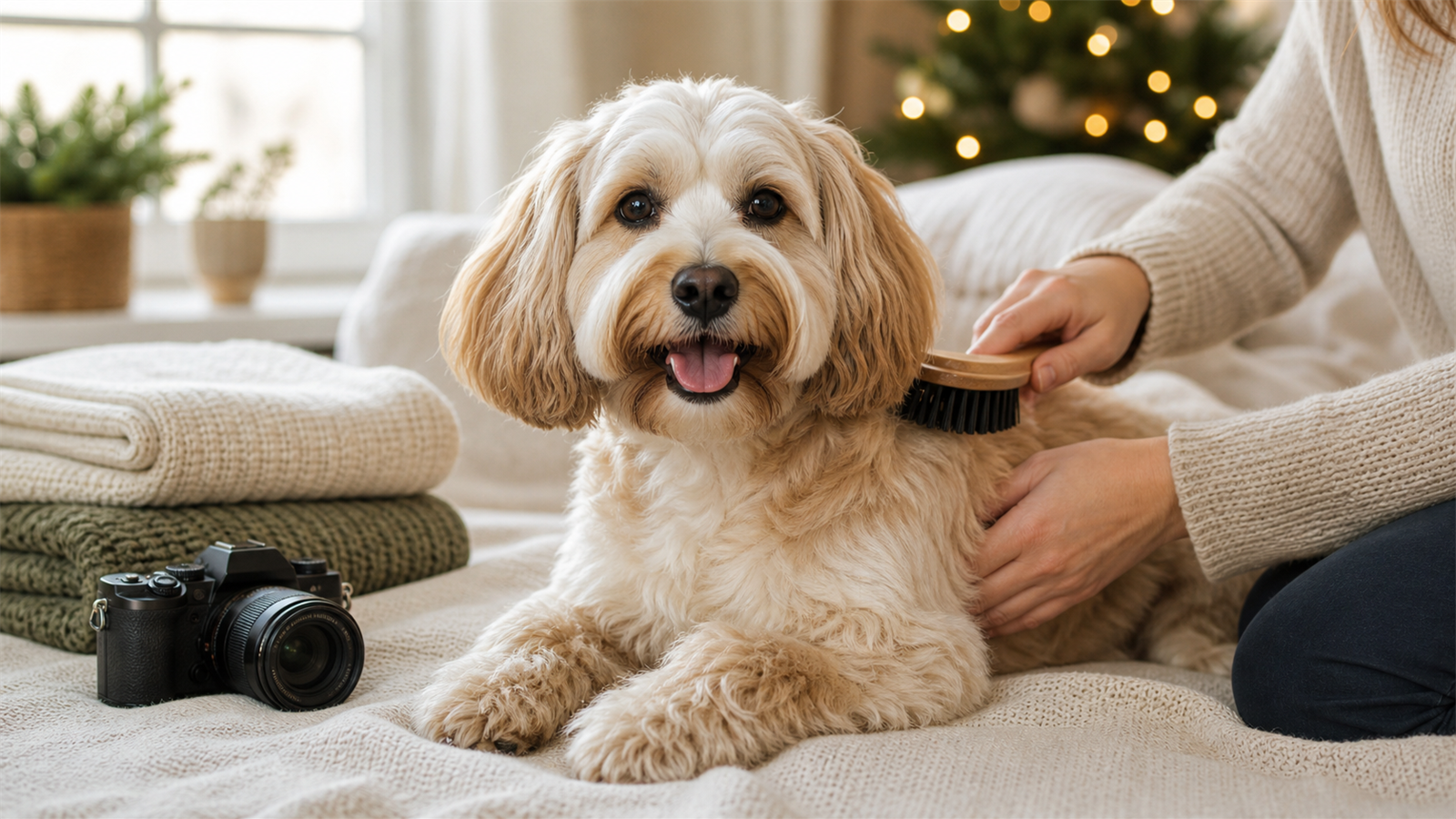
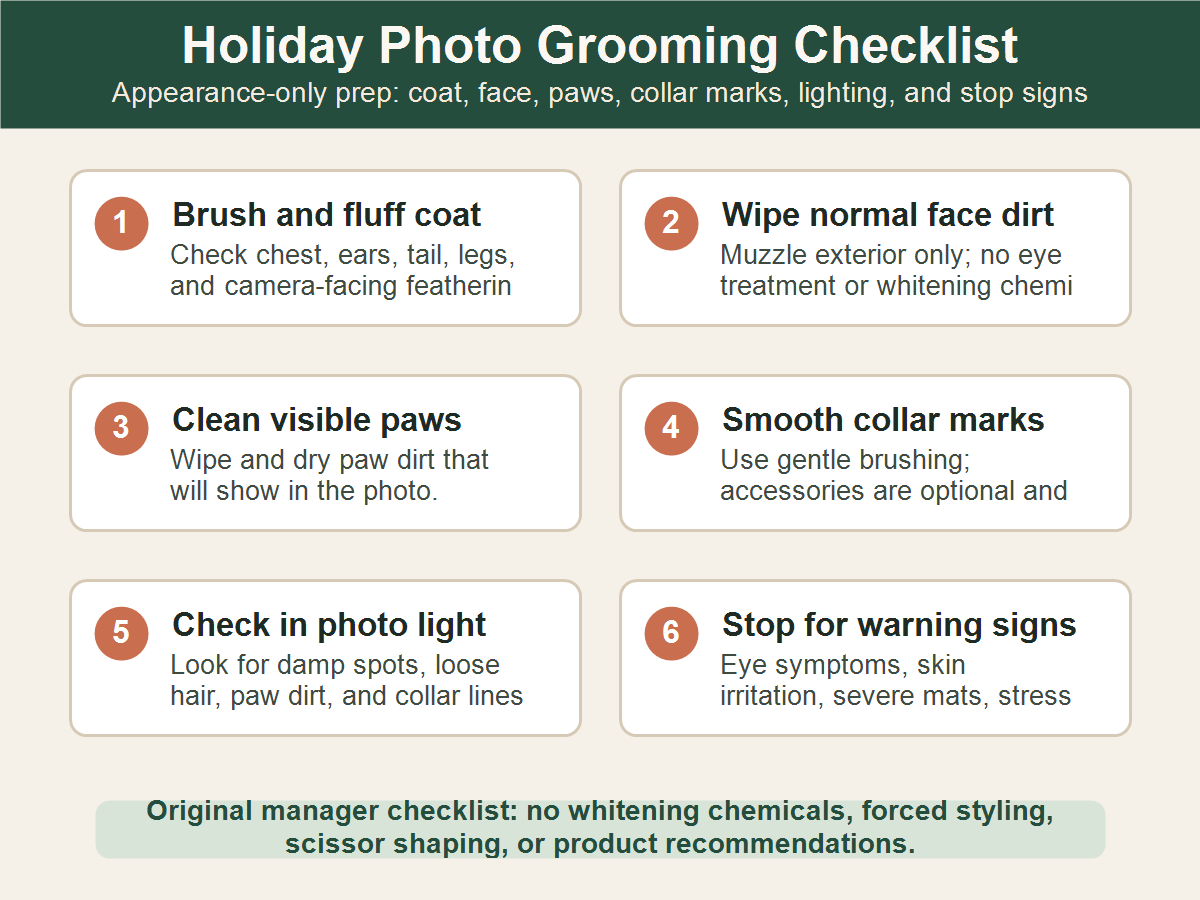
Before holiday photos, keep grooming simple: brush and fluff the coat, wipe normal face and paw dirt, dry the coat fully, check collar marks, and use only already-owned, comfortable, safe, optional accessories such as a collar or bandana. Stop for eye symptoms, discharge, skin irritation, severe mats, stress, pain, aggression, unsafe handling, or breed-specific trim needs.
This is appearance-only prep. It does not cover whitening chemicals, eye treatment, stressful styling, scissor shaping, costumes, product recommendations, or breed-show trim claims.
Photo-Day Grooming Timeline
Do baths and full drying ahead of the photo session, not at the last second. On photo day, focus on visible cleanup: coat fluff, paw dirt, muzzle exterior, collar marks, and loose hair.
If you are also preparing for visitors, use how to groom a dog before guests arrive for the time-boxed hosting workflow. This page stays focused on what the camera sees.
Photo prep should stay calm and appearance-only: coat, face, paws, collar marks, lighting, then stop signs.
Coat Fluff and Loose-Hair Cleanup
Brush gently in the direction that suits the coat, then check the camera-facing areas: chest, shoulders, ears, tail, legs, and any long feathering. Do not force a style your dog dislikes.
For a slower layer check, use how to comb-check a dog coat. If you find tight, painful, or close-to-skin tangles, use the stop boundaries in dog matting vs tangles instead of trying to fix them for the photo.
Face, Eye-Area, and Paw Presentation Boundaries
Use a damp cloth for normal face dirt around the muzzle exterior or nearby fur. Keep water and cloths out of the eyes and ears. Do not treat eye discharge, redness, swelling, or pain as photo prep.
Collar Marks, Accessories, and Lighting-Visible Zones
Remove or adjust a collar only if it is safe and normal for your dog. Smooth collar marks with gentle brushing. Optional accessories should be already owned, comfortable, safe, non-restrictive, and easy to remove. A familiar collar or simple bandana is enough if your dog accepts it.
Use the photo lighting to spot routine loose hair, damp patches, paw dirt, and collar lines before the session starts.
What Not to Do Before Photos
Do not use whitening chemicals, new styling tools, scissor shaping, stressful posing, costumes, or breed-show trim promises. Do not rush mats or work around painful areas. AKC drying guidance supports avoiding unsafe heat; a fully dry coat matters more than a last-minute forced style.
Stop Signs Before a Photo Session
Skip grooming and route to the right professional if your dog has eye symptoms, discharge, skin irritation, severe mats, stress, pain, aggression, unsafe handling, or a trim need that requires a groomer.
Fear Free home grooming guidance supports a lower-stress approach to grooming. If the photo prep is making the dog tense or unsafe, stop the grooming and simplify the photo plan.
Bottom Line
Holiday photo grooming should be calm, familiar, and honest about limits. Brush, wipe routine dirt, dry fully, smooth collar marks, and stop before appearance goals turn into stress, pain, or risky grooming.
FAQ
How should I groom my dog before holiday photos?
Brush, wipe normal face or paw dirt, dry fully, smooth collar marks, and keep accessories optional and comfortable.
Should I bathe my dog before a photo session?
Only if there is enough time to dry fully and your dog handles bathing calmly. Last-minute baths are often not worth the stress.
How do I make my dog’s coat look fluffy in photos?
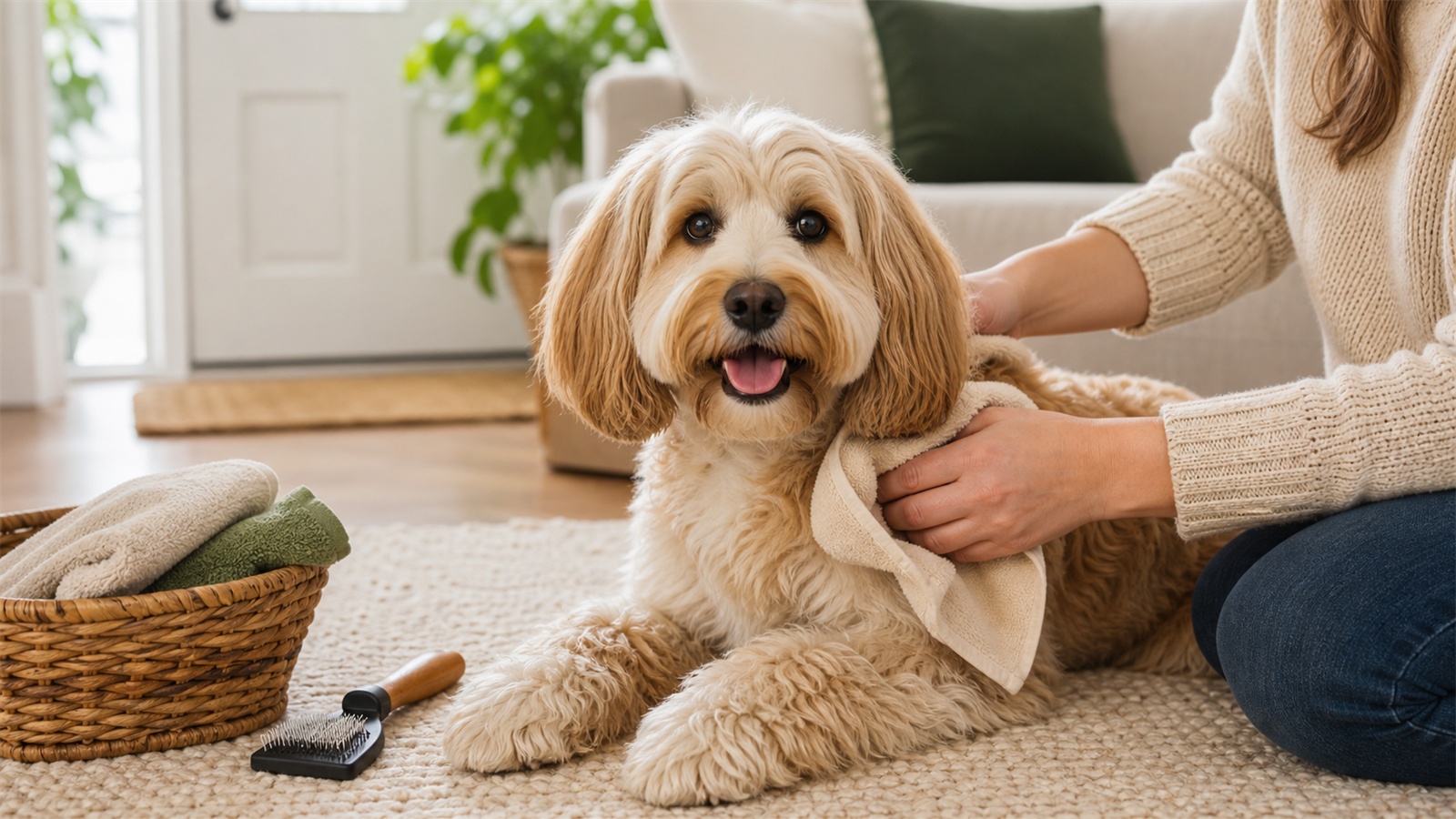
Before guests arrive, choose grooming tasks by the time you actually have. Brush loose hair, wipe paws, clean normal face or drool mess, reset bedding or towels, and check whether odor is routine or a stop sign. Do not rush mats, force a bath, sedate a dog, mask medical odor, or handle pain or panic as a presentation problem.
The safest guest-ready groom is usually smaller than people expect: clean the obvious areas, stop early, and make the dog comfortable enough to handle visitors calmly.
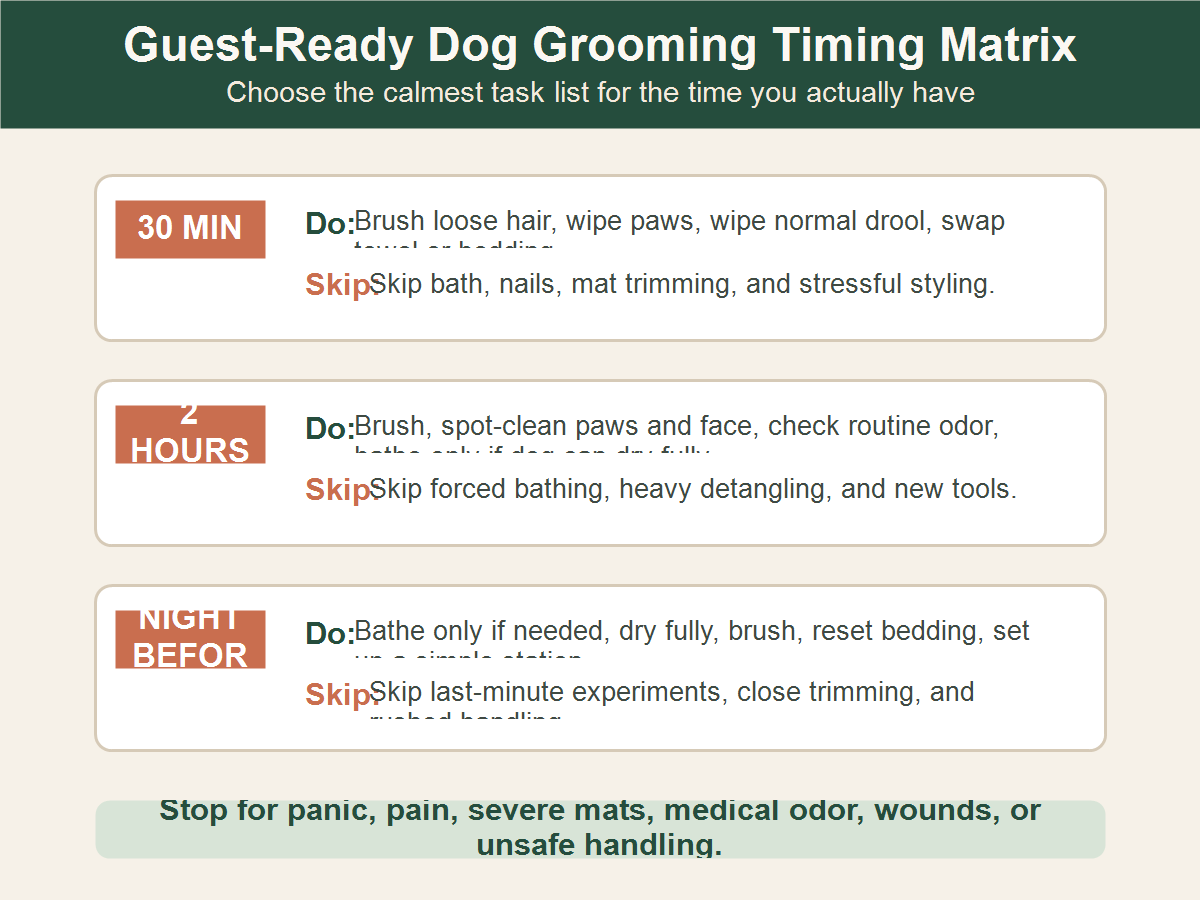
Choose the 30-Minute, 2-Hour, or Night-Before Plan
Pick the plan that matches your real time window. A rushed full bath can create more odor, stress, and damp coat than a calm brush-and-wipe routine.
Full bath, nail trim, mat trimming, stressful styling
Panic, aggression, pain, severe mats, medical odor
2 hours
Brush, spot-clean paws and face, routine odor check, optional bath only if dog can dry fully
Forced bathing, heavy detangling, new tools
Stress, skin symptoms, ear odor or discharge, unsafe handling
Night before
Bath if needed, full dry, brush, bedding reset, simple station setup
Last-minute experiments, close trimming, stressful grooming
Persistent odor, wounds, pain, severe mats, distress
Choose the calmest useful grooming plan for the time you have, not the biggest possible groom.
Fast Loose-Hair and Paw Reset
A short brushing session can remove loose hair without starting a stressful full groom. Wipe paws if your dog tracked in dirt, mud, sand, or salt. Keep the session easy to stop.
If paws need more than a quick wipe, use the slower routine in how to clean dog paws after a walk. Stop for limping, bleeding, swelling, strong pain, or embedded material.
Face, Drool, and Routine Odor Cleanup
Use a damp cloth for normal drool around the muzzle exterior, beard, or chest. Check bedding and towels if the guest area smells doggy. Often the fastest improvement comes from fresh bedding plus a quick brush.
Do not deodorize ear odor, skin odor, discharge, wounds, or persistent strong odor. Those are not cosmetic guest-prep problems. ASPCA grooming guidance supports checking with a veterinarian when odor or skin changes are unusual or persistent.
When Not to Bathe Before Guests
Skip bathing if your dog cannot dry fully before visitors arrive, is stressed, has painful areas, has severe mats, or has skin or ear symptoms. A damp, rushed bath can make the visit harder for both dog and guests.
Bathing can help when the dog is calm, the dirt is routine, and there is enough drying time. It is not a fix for panic, pain, wounds, ear symptoms, medical odor, or unsafe handling.
Mats, Stress, and Stop-If-Unsafe Rules
Do not trim mats in a hurry. Do not force handling around pain, panic, or aggression. If you are unsure whether a tangle is safe, use the boundaries in dog matting vs tangles and call a groomer for tight or painful mats.
If the dog starts hiding, growling, snapping, shaking, freezing, or trying hard to escape, stop. The guide on dog grooming anxiety signs can help decide when handling should wait.
Guest-Area Cleanup Without Product Recommendations
Keep this generic: remove used towels, wash dog bedding if time allows, place a clean towel near the door, and keep a waste bag or laundry bag handy. No product recommendations or commercial calls to action are needed.
If grooming is unsafe, switch to environmental cleanup: fresh bedding, clean towels, and a calmer space for the dog away from the busiest guest traffic.
Bottom Line
Guest-ready dog grooming is about calm, clean basics. Brush loose hair, wipe paws, clean normal drool, reset bedding, and stop before stress or pain turns the visit into a problem. Save bigger grooming jobs for a day when no one is arriving soon.
FAQ
What is the fastest way to groom a dog before guests arrive?
Brush loose hair, wipe paws, wipe normal drool from the muzzle exterior, and swap bedding or towels.
Should I bathe my dog right before visitors come?
Only if there is enough time to dry fully and your dog is calm. Otherwise, use brushing and spot-cleaning.
How do I reduce dog smell before guests?
Brush, wipe routine drool or paw dirt, and reset bedding. Persistent, ear, skin, wound, or unusual odor should route to a veterinarian.
What if my dog has mats before guests arrive?
Do not rush mat trimming. Severe, tight, painful, or extensive mats need a professional groomer or veterinarian.
When should I skip grooming before visitors?
Skip grooming for panic, aggression, pain, severe mats, wounds, medical odor, distress, or unsafe handling.